Five products, four acids
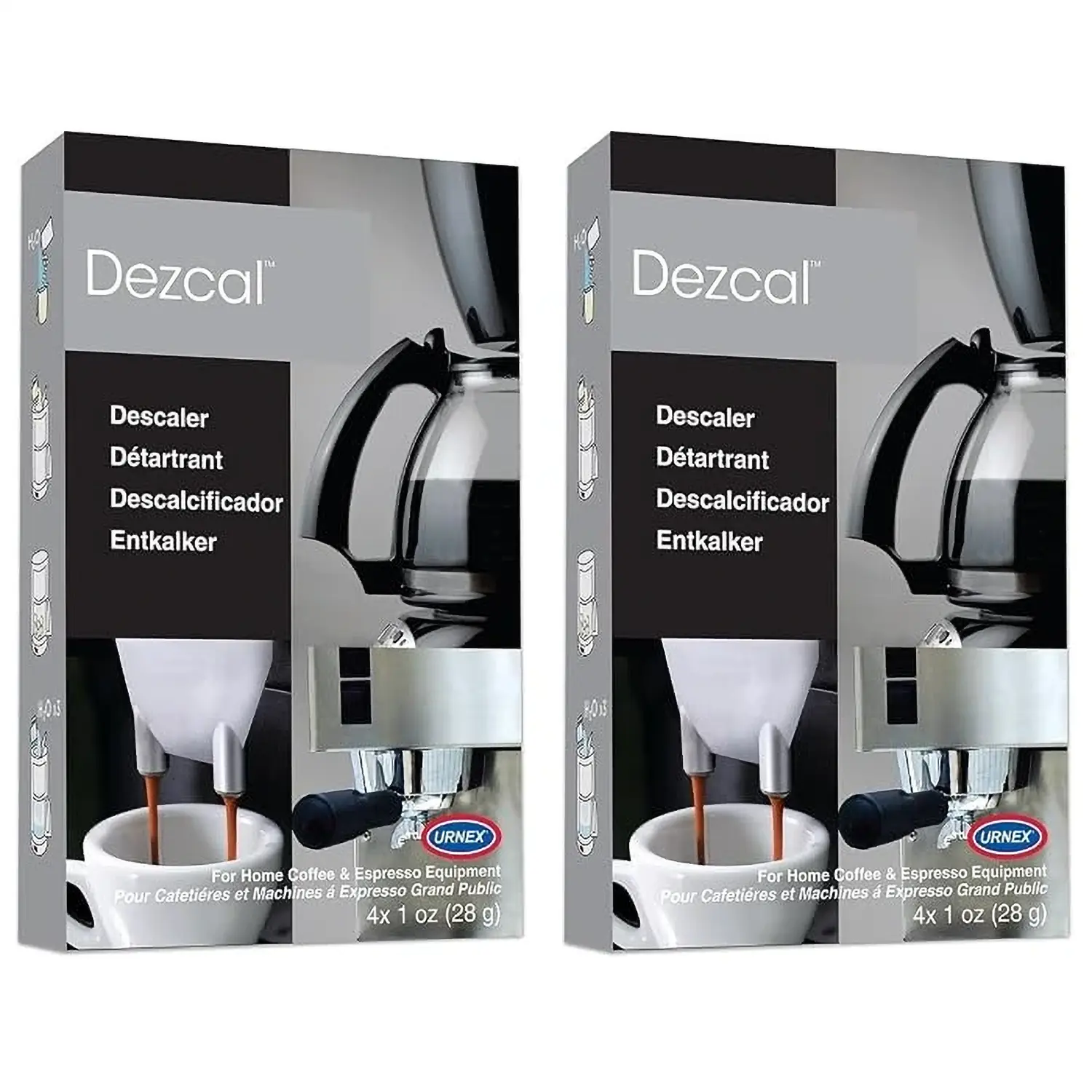
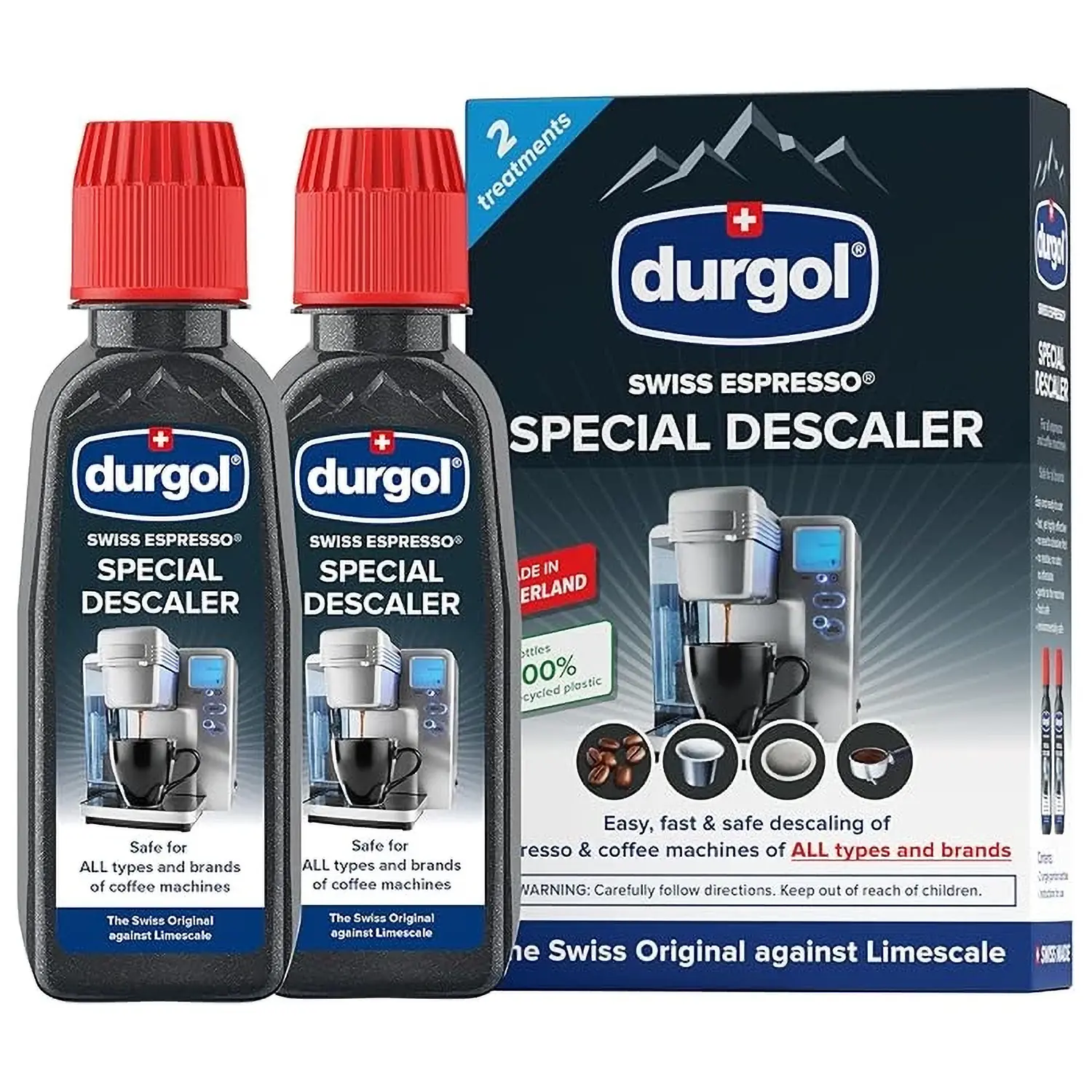
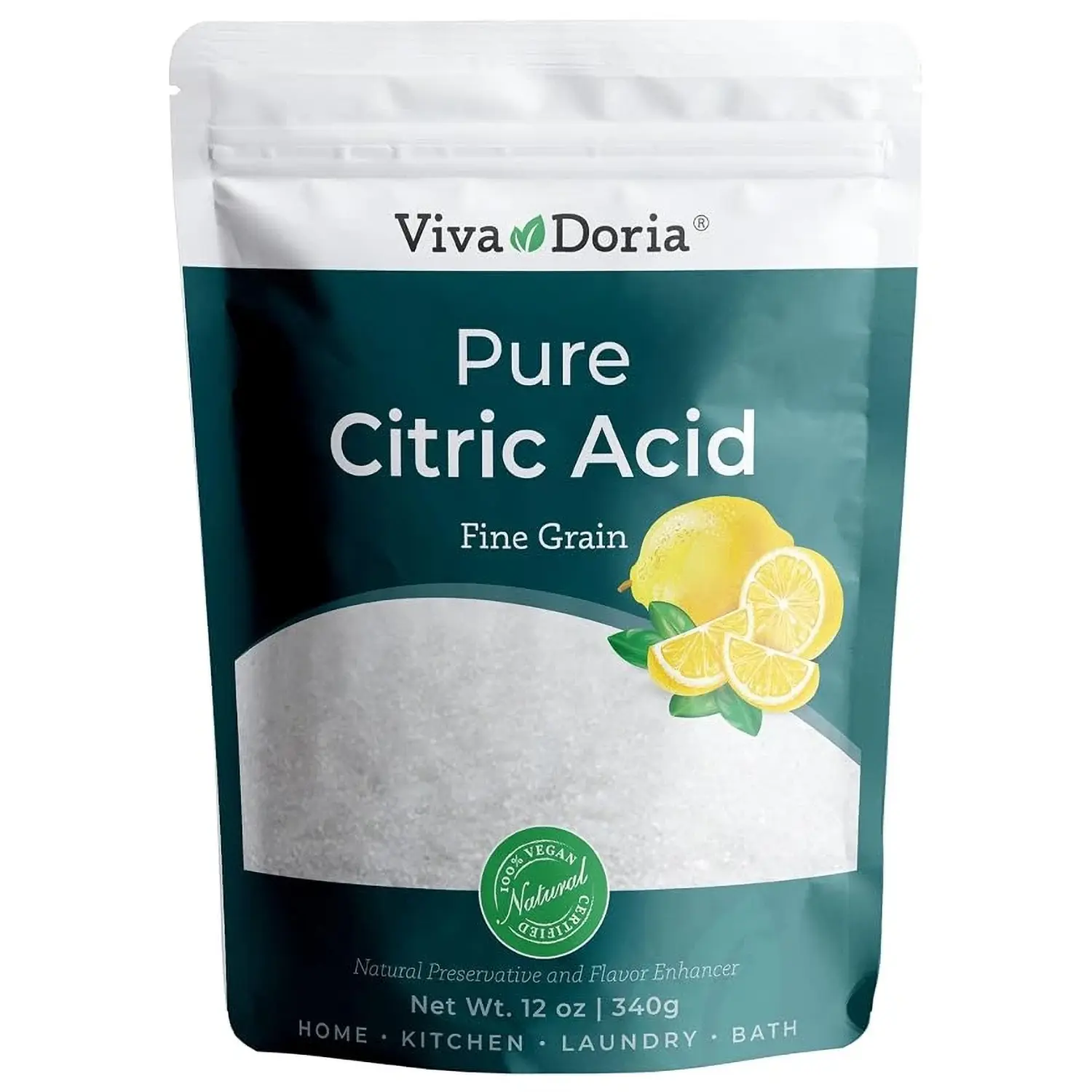
For a stainless or brass boiler, buy Urnex Dezcal: disclosed chemistry, one packet to a litre, about two dollars a descale. For an aluminium boiler such as the Gaggia Classic Pro, buy Durgol Swiss Espresso. For a super-automatic, buy the brand's own product, because the guided program is built around its dose. Plain food-grade citric acid does the same job as the branded powders for a fraction of the price, anywhere but aluminium.
Every descaler is an acid, because limescale is a carbonate and only an acid dissolves it. What separates the bottles is which acid, and how strong. The safety data sheets and ingredient disclosures tell you, once you go and read them, which is what we did.
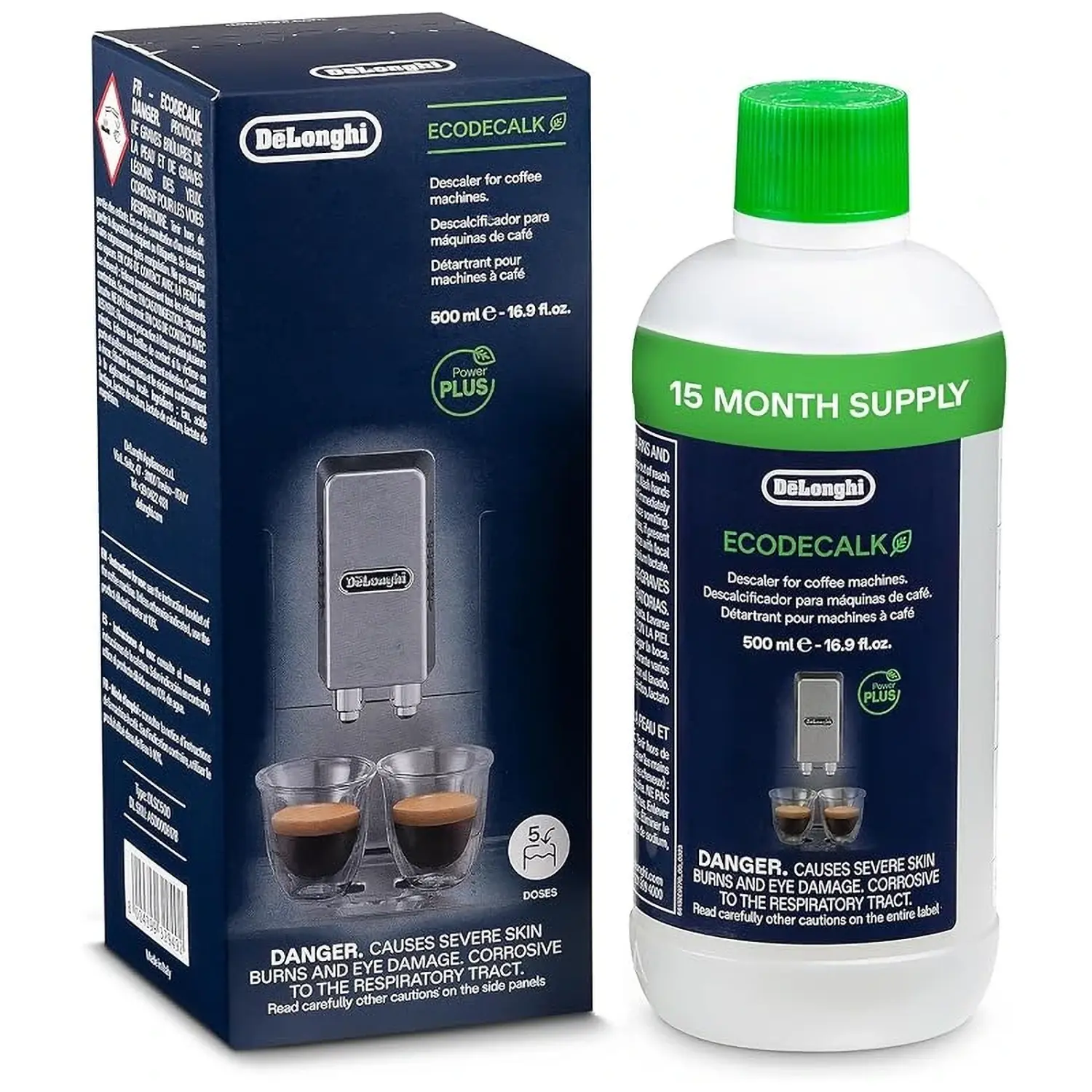
Urnex Dezcal powder is citric acid plus sulfamic acid, per Urnex's own ingredient sheet. De'Longhi EcoDecalk is lactic acid, listed at 30 to 50 percent on the 2023 safety data sheet, which is the whole basis of the eco label: lactic acid is a food acid and the gentlest of the four. Durgol Swiss Espresso is sulfamic acid, the strongest acid in common descaler use, sold ready-mixed so the concentration is fixed. Breville changed its recipe. The older BES007 sachets were malic acid at 30 to 60 percent with sulfamic and citric behind it. The BCC101 sachets that replaced them are citric acid at over 60 percent with a little tartaric, 25 grams each, per the 2025 US safety data sheet. In other words the current Breville product is close to plain citric acid in a branded envelope.
A Home-Barista member who moderates the forum's water discussions put the acids in strength order in January 2024, using the first dissociation constant, and it is worth having: sulfamic is close to a strong acid, then phosphoric, then citric, then lactic, then the acetic acid in vinegar a long way behind. Each step down that list is roughly ten times weaker. That single ordering explains most of what follows.
What a descale actually costs
The table below carries a cost per descale, worked from the Amazon price we verified on 2026-09-07 and the dose the maker specifies. Prices move, so treat the ratios as the durable part rather than the cents.
The spread is wider than the shelf suggests. Dezcal lands around two dollars a descale because a 28 gram packet treats a litre and the two-box pack holds eight of them. Breville and EcoDecalk both sit near three dollars and a bit. Durgol is near seven, because each descale is a whole 125 ml bottle and the pack holds two. Plain food-grade citric acid, dosed the way the home-barista forums dose it, comes out at well under a dollar.
None of those numbers is large against the price of the machine. They matter because the descaling interval is set by your water rather than by a calendar, and in a hard-water city that can mean every five weeks. Ten descales a year at seven dollars is a different proposition from ten at two.
Which one your machine wants
Start with the manual, because a warranty claim is easier when the descaler is the one the maker named. Beyond that, the decision follows the boiler.
Machines with an aluminium boiler are the sensitive case, and the Gaggia Classic Pro is the well-known one in our catalogue. Whole Latte Love's technical guidance recommends Durgol Swiss Espresso for aluminium and says it is the only product, other than one a manufacturer names, certified for that material. Durgol's own listing describes a corrosion-protection formula, which is consistent with that. We would not put a strong home-mixed acid through an aluminium boiler.
Super-automatics and bean-to-cup machines should use the brand's own product, and the reason is the dose rather than the chemistry. A De'Longhi Magnifica runs a guided program built around 100 ml of EcoDecalk in a full tank; feed it a different product at a different strength and the program still runs to its own timing. The same logic applies to Philips and Jura.
Breville machines will run on Breville's envelopes or on Dezcal. The Barista Express, Bambino Plus and Barista Pro all take a descaling cycle, and Dezcal at one packet to a litre is what the specialist retailers have recommended for stainless and brass boilers for years. We keep the Breville descaling walkthrough separate because the cycle has its own quirks.
For a stainless or brass boiler with no maker's preference, Dezcal is the sensible default, and citric acid is the sensible budget.
Citric acid, and how much of it
Food-grade citric acid is the active ingredient in many of the bottles above, sold without the packaging. It works. One Home-Barista restorer who tried both vinegar and citric on a badly scaled machine reported in January 2024 that only the citric acid shifted all of it.
The dose the forums use is smaller than most people guess. Jim Schulman's water FAQ, the long-standing reference on Home-Barista, is cited there as 8 to 12 grams per litre of water, enough to take out roughly 5 grams of scale. Other members use two tablespoons to the litre, which is about double that. Dissolve it in warm water, because it goes into solution far more readily, then run it exactly as you would a branded product and rinse with the same two full tanks.
Two cautions from the same thread, both worth keeping. If the solution comes out with a green tinge, that is dissolved copper from the boiler and fittings, which means the acid was too strong or left too long; use less and do not pour it down a drain that feeds a watercourse. And a strong acid in an aluminium boiler is the one combination to avoid, so on those machines buy the Durgol.
Why there are test strips in a descaler guide
Because the strip tells you how often to buy the descaler. We put our Espresso Water Map together from the published reports of the 100 largest US cities, and the descaling interval it derives runs from about five weeks in San Antonio to a year in New York, driven by carbonate hardness. That is a bigger difference than the difference between any two products on this page.
A hardness strip reads total hardness rather than carbonate hardness, so it slightly overstates the scaling fraction, but it puts you in the right band in thirty seconds. The strips listed read 0 to 425 ppm, which covers every city in our dataset, where the range is 9 ppm in Portland to 325 in Madison. If yours reads under 50, you can stop buying descaler on a schedule and start buying it when the machine asks.
What not to buy
Vinegar. Whole Latte Love's position is that they always recommend against it, on taste and on risk to internal components, and we agree; it is also the weakest acid on the list by a wide margin.
Cleaning tablets sold next to descalers. Breville's BEC250 tablets appear in the same search results as its descaler, and they are a different product for a different job: an alkaline detergent for coffee oils in the group head. They do nothing to scale. Our Breville cleaning guide covers that side.
Unbranded descalers with no ingredient disclosure. Several listings describe themselves as compatible with every machine and say nothing about what is in them. Some are perfectly good citric acid at a markup. The point of this page is that you can know, so buy the ones where you can.