The model numbers, and the two suffixes that matter
For most people: the Barista Express Impress, because assisted tamping fixes more bad shots than any other feature in the range. Best value: the Bambino Plus with a separate Baratza Encore. If you want the ceiling, the Dual Boiler is the cheapest 58 mm Breville and the only one that can extract and steam at once. Hands-off: the Barista Touch Impress, which does the Oracle Jet's job for $500 less.
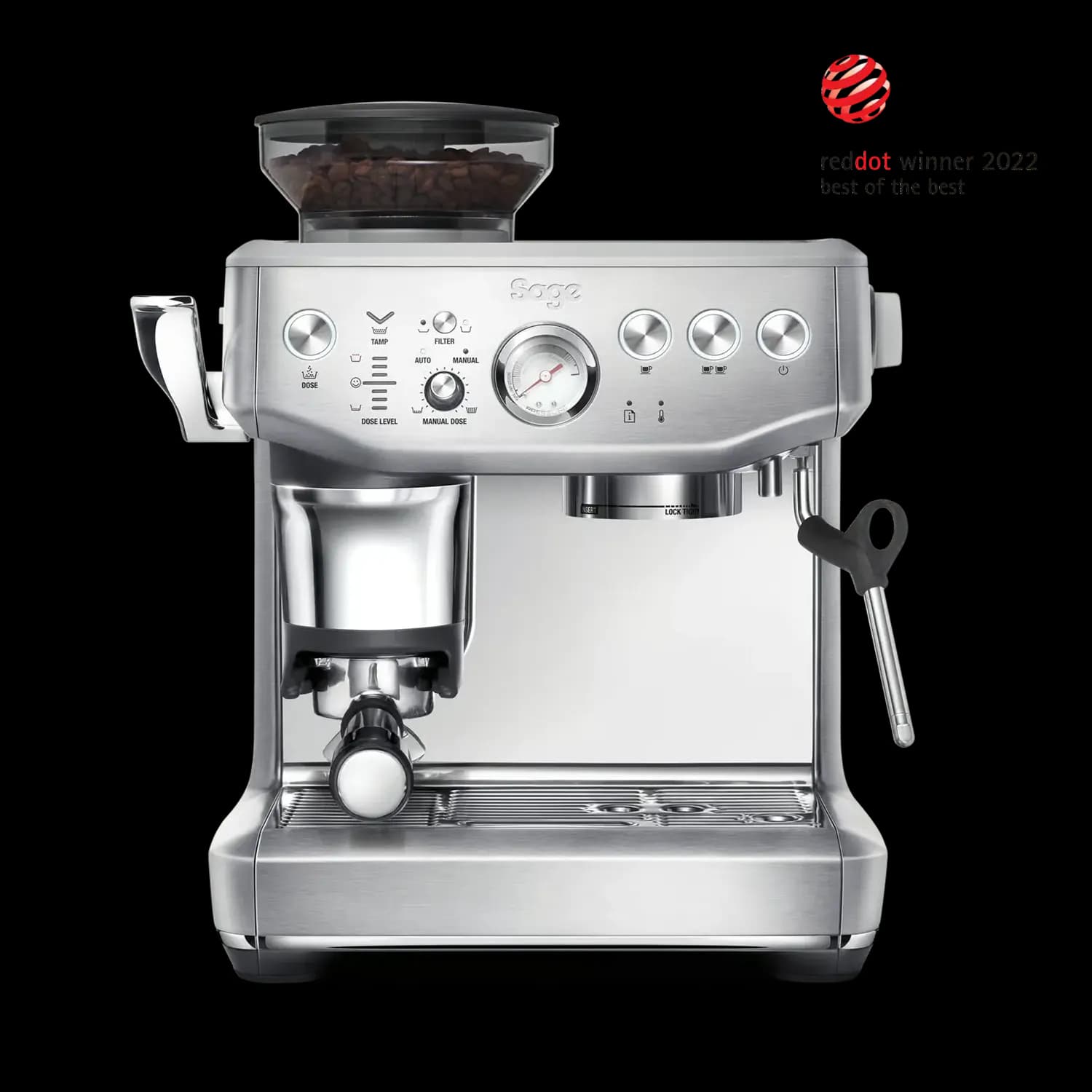
BES stands for Breville Espresso, and the three digits climb with the feature count. The current US range runs BES450 Bambino, BES500 Bambino Plus, BES870 Barista Express, BES876 Barista Express Impress, BES878 Barista Pro, BES880 Barista Touch, BES881 Barista Touch Impress, BES920 Dual Boiler, BES980 Oracle, BES985 Oracle Jet and BES990 Oracle Touch. In the UK and Europe the same machines are sold as Sage, with the same numbers.
Two words in those names carry real weight. Impress means the Impress Puck System, which applies a consistent 22 lb tamp and finishes with a 7 degree twist, and pairs it with dosing that adjusts based on your last grind. It removes the single step beginners get wrong most often. Touch means a touchscreen with saved drink presets and, on the newer models, automatic milk.
Everything else in the naming is noise. What actually separates these machines is portafilter size, how they heat water, and whether the grinder is any good.
Bambino or Bambino Plus?
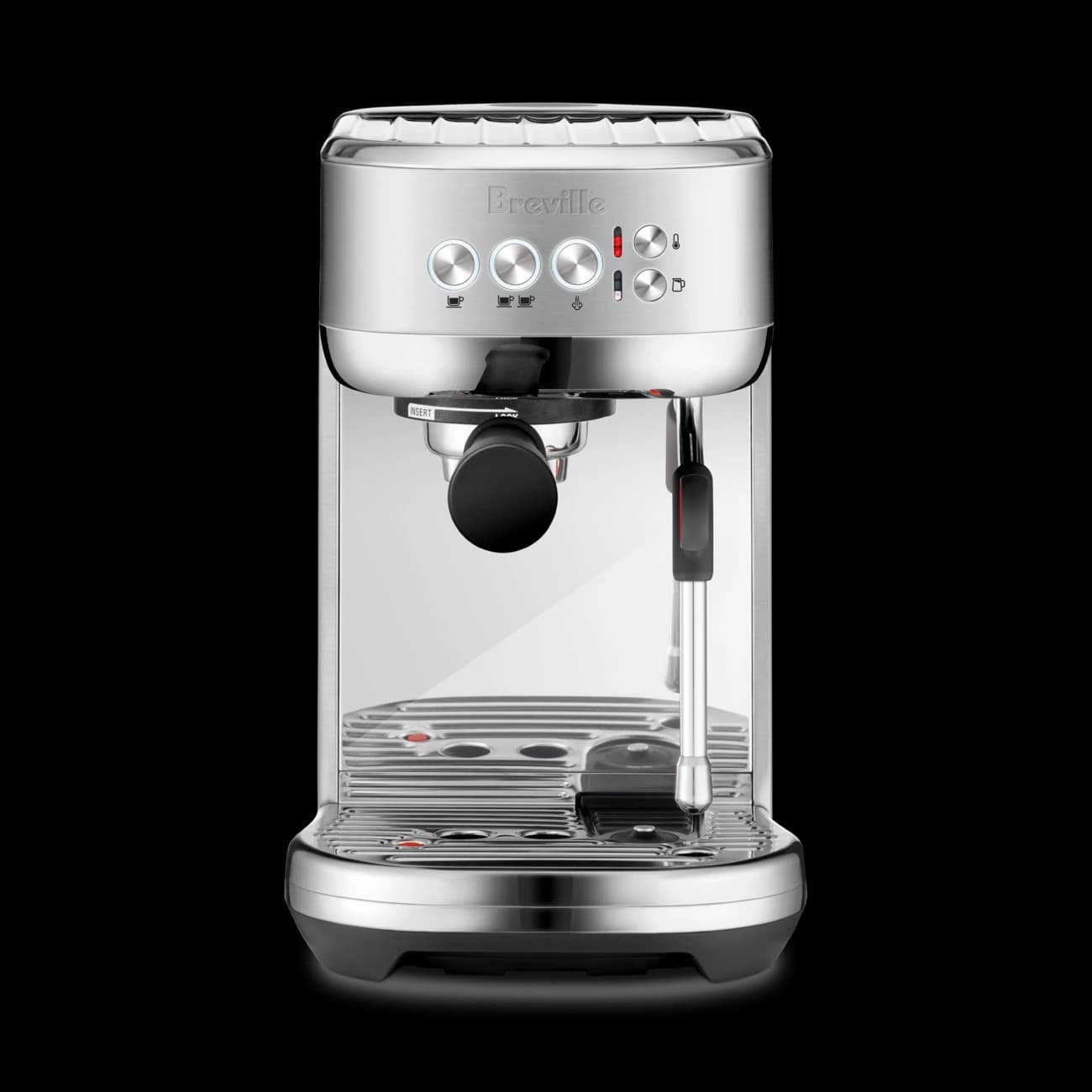
This is the question most people bring to Breville's range, and the answer is $200 of milk. Both machines use the same ThermoJet heater, reach extraction temperature in about 3 seconds, run PID temperature control and low-pressure pre-infusion, draw 1560 W and brew through a 54 mm portafilter with single- and dual-wall baskets. Put the same coffee through either one and you get the same shot.
What the Bambino Plus at $499.95 adds over the Bambino at $299.95 is automatic milk texturing. A temperature sensor on the drip tray reads the jug and stops the steam at Warm, Ideal or Hot, a second button sets the foam to Low, Medium or High, and the wand purges itself when you lower it. You can still steam by hand on the Plus if you want to.
The smaller differences come from Breville's own manuals. The Plus has a 64 fl oz (1.9 L) tank against the Bambino's 47 fl oz (1.4 L). Its portafilter is stainless steel, where the Bambino's is aluminium and not dishwasher safe. It also ships with a Razor dose-trimming tool and a cleaning disc. One difference runs the other way: the plain Bambino has a dedicated hot water button for Americanos and warming cups, while the Plus makes you press 1 CUP and MILK FOAM together for the same thing.
Our call. If someone in the house drinks lattes or flat whites and has no interest in learning to steam, the Plus earns its $200, which is why we score it 9 for ease against the Bambino's 7.5. If you drink espresso or Americanos, or you would like to learn milk properly, buy the Bambino and spend the $200 on a grinder. The Bambino plus a Baratza Encore ESP at about $200 costs the same as a Bambino Plus on its own, and for an espresso drinker it is the better setup.
The 54 mm line and the 58 mm line
This is the fork that decides how far a Breville can take you, and Breville does not advertise it. The Bambino, Bambino Plus, Barista Express, Barista Express Impress, Barista Pro, Barista Touch and Barista Touch Impress all use a 54 mm portafilter. The Dual Boiler and the Oracle machines use 58 mm, the commercial standard.
Fifty-four millimetres is not a bad size. It makes a deeper puck for the same dose, which is forgiving when your grind is not dialled in, and Breville's own baskets are fine. The limitation is the aftermarket. Precision baskets, bottomless portafilters and distribution tools are made for 58 mm first and 54 mm sometimes, so the upgrade path is narrower.
For most people that never becomes a problem. If you already know you are the sort of person who will buy a bottomless portafilter within six months, skip the whole Barista range and start at the Dual Boiler, or buy a Gaggia Classic Pro for a third of the money and put the rest into a grinder.
Thermocoil or ThermoJet, and the odd gap in the pricing
Breville uses three heating designs. Thermocoil with PID control holds water at 200 F and takes around 30 seconds from cold. ThermoJet gets there in about 3 seconds. The Dual Boiler runs separate brew and steam boilers, which is the only arrangement here that lets you extract and steam at the same time.
Now look at what that does to the price ladder. The Barista Express is $699.95 with 16 grind settings and a thermocoil. The Barista Express Impress is $799.95, adds assisted tamping and 25 grind settings, and keeps the thermocoil. The Barista Pro is $849.95, moves to ThermoJet and 30 grind settings, and drops the assisted tamping.
So the $50 between the Impress and the Pro does not buy an upgrade. It buys a swap: faster heating in exchange for tamping you now do yourself. Decide which of those you care about before you look at anything else, because that one choice sorts most of the range. Nervous about consistency, buy the Impress. Rushing out of the house, buy the Pro.
Where each machine actually sits
The Bambino at $299.95 and the Bambino Plus at $499.95 are the same compact machine with different milk systems. Both run ThermoJet and hold an 18 g dose. The plain Bambino gives you a manual steam wand; the Plus adds an automatic one with three temperatures and three texture levels. Neither has a grinder, so add about $200 for one that can grind fine enough for espresso. We rate the Bambino Plus as our beginner pick and the reasoning is in our review.
The Barista Express, Express Impress and Barista Pro are the all-in-one middle, $699.95 to $849.95, grinder included, and the fork above tells you which to take. Our Barista Pro review covers what living with one is like, including the grinder retention that owners bring up more than anything else.
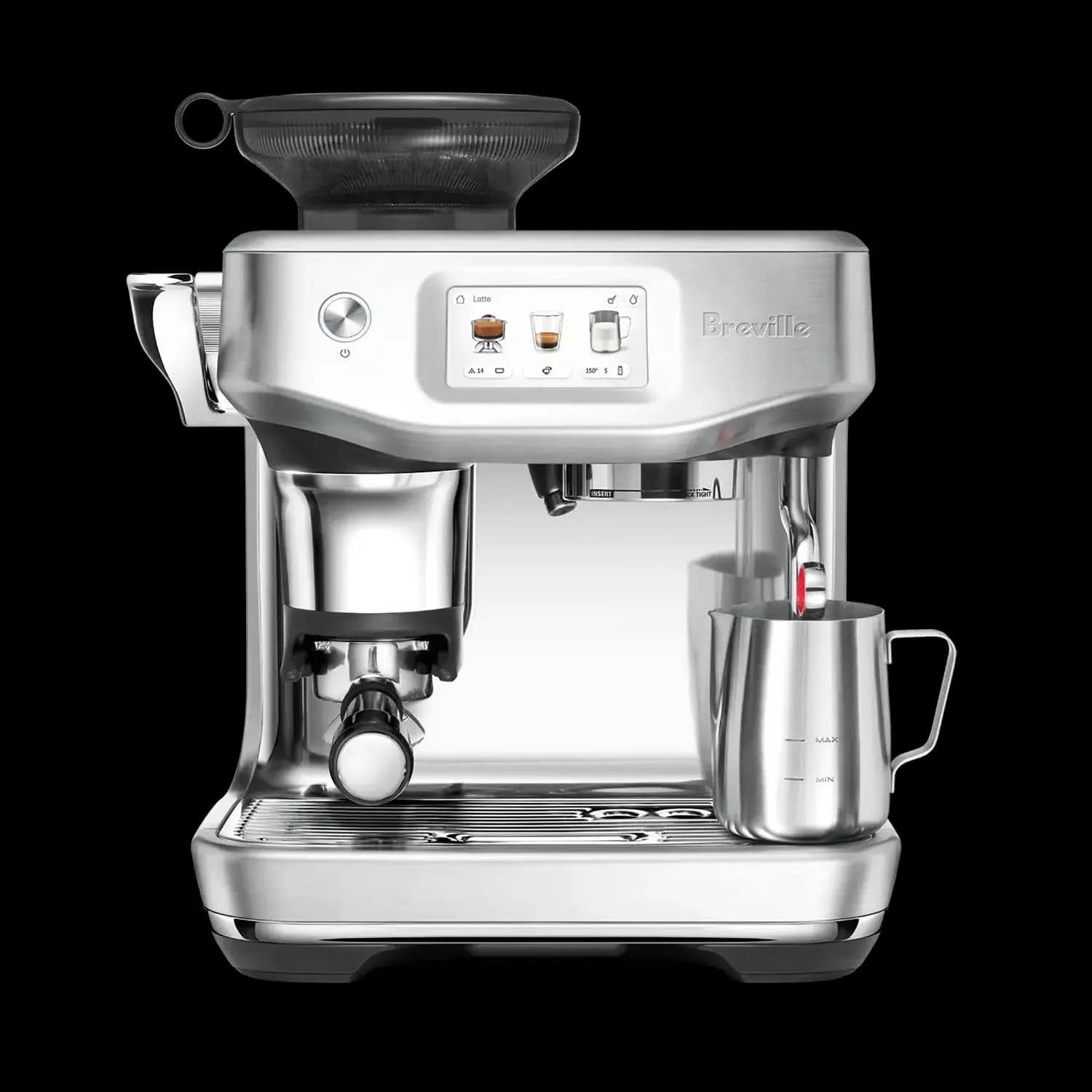
The Barista Touch Impress at $1,499.95 is where the range stops being about espresso and starts being about not thinking. Baratza European Precision Burrs with 30 settings, ThermoJet, assisted tamping, and an Auto MilQ system that texturises dairy, soy, almond and oat across eight levels and a 104 F to 167 F range. Thirteen presets, six of them customisable, and it does cold brew.
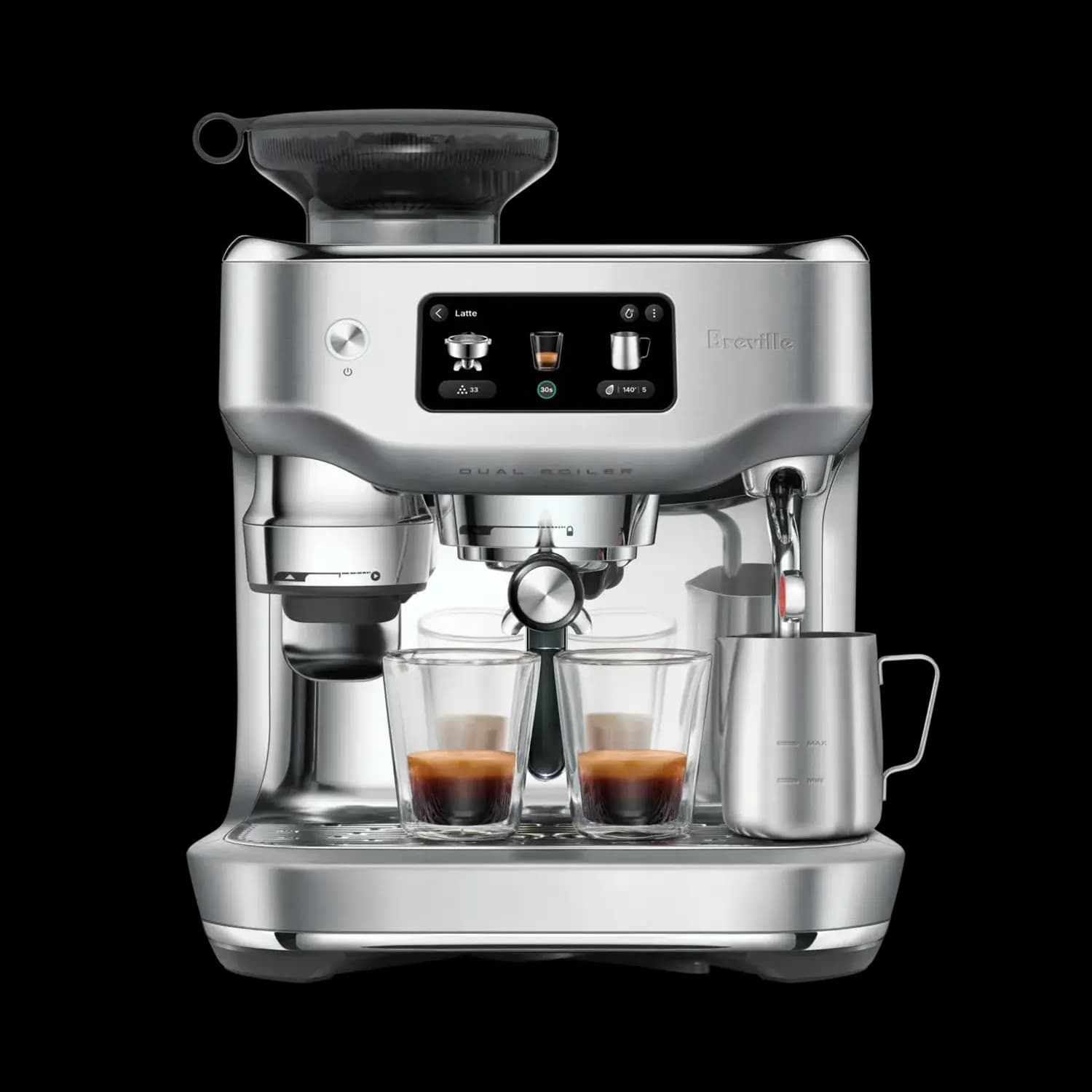
The Dual Boiler at $1,599.95 is the enthusiast machine: 58 mm, 22 g dose, PID on the brew boiler and the group head, a pressure gauge on the LCD, and no grinder at all. The Oracle Jet at $1,999.95 automates the grinding, tamping and milk on top of a 58 mm group and a 2.2 L tank, with 38 mm Baratza burrs inside.
What we would buy
Under $500, the Bambino Plus plus a Baratza Encore ESP beats every all-in-one at the same total price, because a separate grinder is always better than a built-in one and you keep it when you upgrade the machine.
Between $700 and $850, take the Barista Express Impress. Assisted tamping fixes more bad shots than three seconds of heat-up time saves you mornings, and the 25 settings are enough. We would only take the Pro over it if your household makes several drinks back to back.
Above $1,500 the answer depends on what you want out of the hobby. The Dual Boiler is the better espresso machine and it will still be the better espresso machine in ten years, but you have to buy a grinder and learn to use it. The Barista Touch Impress and the Oracle Jet cost similar money to make the machine do the learning for you. Both are honest products. Just be clear which one you are actually buying, because they are not competing on the same thing.