Where you buy it changes what you get
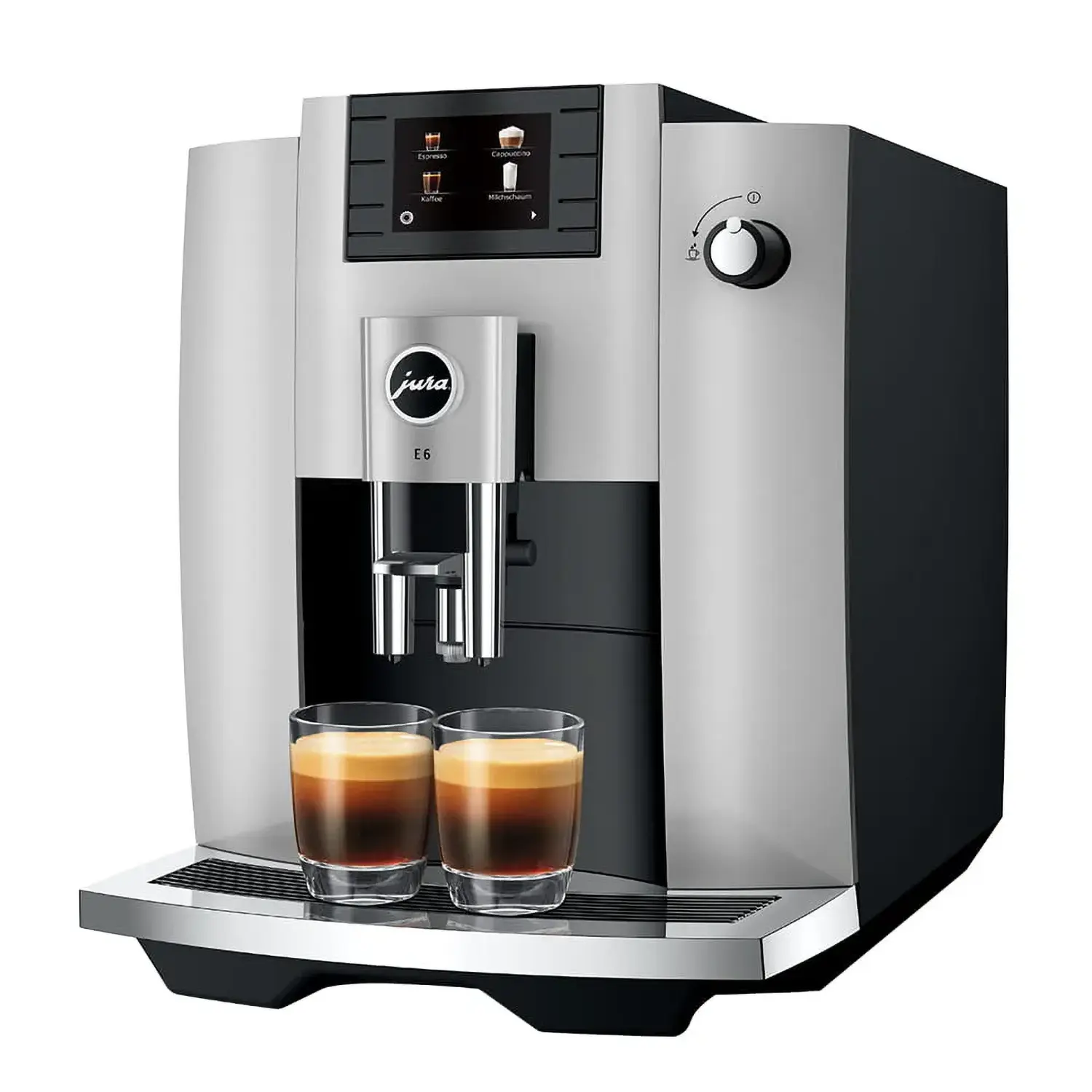
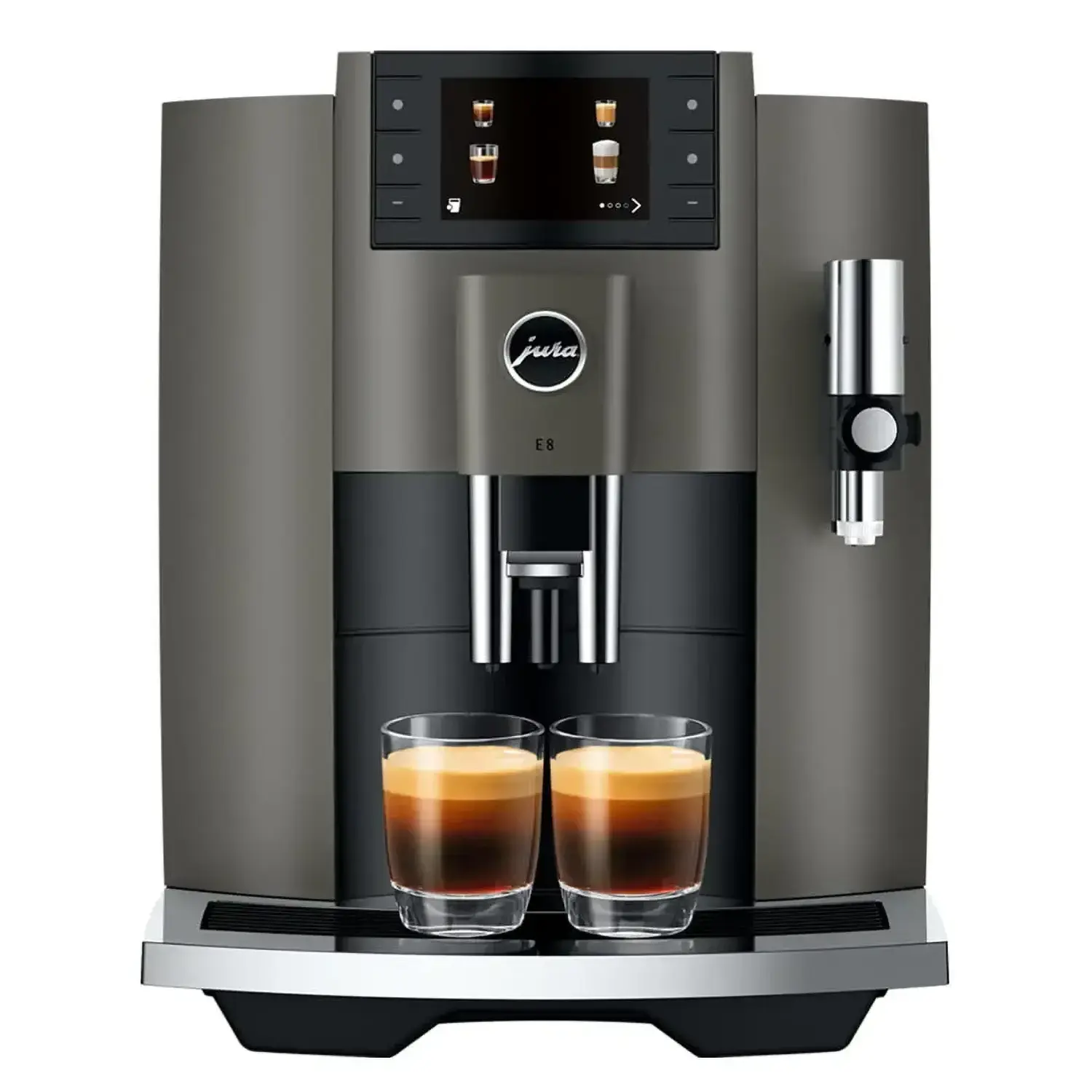
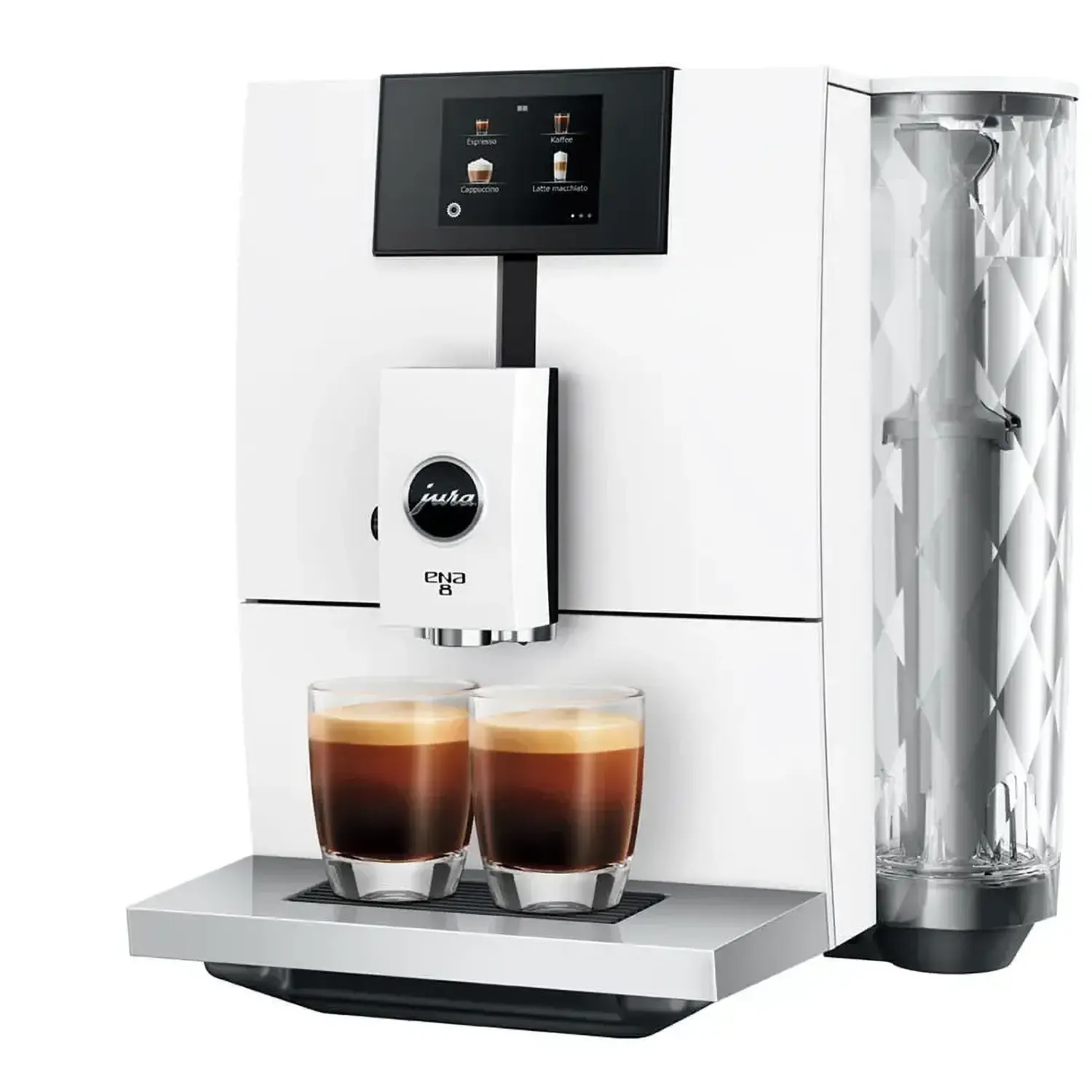
Buy the E6 for most people: it runs the identical extraction process to the E8 for a fraction under two thousand dollars. Buy the E8 if milk drinks are the whole point, because it is the only one whose spout cleans itself. Buy the ENA 8 for a small kitchen. Whichever you choose, buy it from an authorised dealer, because Jura's warranty terms strip cover from anything else.
Jura's own warranty terms strip cover entirely from a machine purchased outside its approved dealer network, and they point to eBay and any seller site missing complete legal company information as the kind of listing that fails that test. Amazon is not named on either side of that line. That leaves the biggest retailer for these machines sitting in a gap Jura has simply never addressed in public, and it is worth more to a buyer than any spec in the table below.
We checked who sells every listing in this guide on 2026-08-01, from a US delivery address, and the answer splits three ways. Amazon.com itself is the seller on the ENA 4, the ENA 8, the E8 and the J8 twin. The S8, the C9 and the GIGA 10 come from Designandgrace, a marketplace seller whose Amazon storefront name states it is an authorised Jura dealer. The remaining four, the C3, the E4, the E6 and the Z10, come from ordinary resellers with no such claim: Kitchen Kapers, AMZDistributor, Sole Providers and Northwood Living. That last group is the one to be careful with, because Jura's warranty depends on the seller being authorised and none of those four say they are. Worth knowing before you compare prices: the cheapest listing for a given Jura is often the one with nothing standing behind it.
Three rows on this page carry no buy button: the C3, the E4 and the Z10. Every listing we could find for those comes from a reseller that makes no claim to being an authorised Jura dealer, and on this brand that is the difference between owning a machine with a warranty and owning one without. The E6 is the exception we made, because it is our pick for most people and sending you nowhere helps nobody. It links, and the seller and the risk are named underneath the button rather than left for you to discover at the checkout.
The line letters are the product map
Jura's range reads as noise until you notice the letters do the same job De'Longhi's EC and ESAM prefixes do: they tell you what kind of machine you are looking at before you read a single spec. ENA is the compact body. E is the mainstream bean-to-cup. C drops the milk system entirely and brews pure coffee only. S, J, Z and GIGA climb into dual grinders and cold brew, in that order of ambition.
Inside the E line the numbers behave the way you would expect, unlike some brands where a higher digit buys you less. The E4 has no milk system of any kind, not even a manual wand, which is an odd thing for a machine wearing the mainstream letter and something Jura does not put on the front of the box. The E6 adds a manual spout you clean by hand. The E8 replaces that with a spout that cleans itself. Each step up the E line buys more of the same idea, and the price climbs with it.
Above the E line the logic changes from milk handling to grinder count. The S8 is a newer touchscreen generation of the same single grinder as the E8. The J8 twin and the currently unavailable J10 twin add a second grinder and a second bean hopper, built for a household running two different beans rather than one better one. The Z10 keeps a single grinder and adds cold brew extraction instead. The GIGA 10 is the only machine in the range with both a second grinder and cold brew, which is the entire reason it is the most expensive thing Jura sells here at $5,499.
Every Jura with a milk spout eventually struggles with it
We put three of these machines through a full review, and the owner research behind the E6, the E8 and the ENA 8 turned up the same weak point on every one of them, entirely independently of each other. Milk residue works its way into the spout mechanism over years of use, however carefully the machine is cleaned, and the foam eventually goes thin or stops forming at all. Price does not appear to change this. The cheapest and the most expensive machine in our reviewed set show the identical pattern, which points at the milk path itself rather than at build quality on any one model.
That is what makes the C line worth a second look rather than a downgrade. The C9 and the C3 have no milk spout to fail, because they do not make milk drinks in the first place. The C3 launched in January 2026 as a pure black coffee machine and got a cool reception from some of the trade press, who mostly asked why anyone would buy a Jura that cannot make a cappuccino. We think that question has the reasoning backwards: for a household that drinks black coffee anyway, removing the part every other model in this range eventually struggles with is not a missing feature.
We do not have long-term owner reports on the C3 or the C9 specifically, because both are new enough that reports have not accumulated yet. What we can say is that the architecture supports the reasoning before any of that data exists, which is a different and more honest claim than telling you the C line will last longer. It should, on paper, have fewer things to go wrong. We will update this once real ownership history exists to confirm it.
What we would actually buy
Under $1,500, the choice is really about milk. Take the ENA 4 if you steam your own milk and want Jura's compact ENA body, or the C3 if your order never involves milk and you would rather not own the spout at all. The E4 costs 200 dollars more than the C3 for the identical no-milk proposition, so that extra money buys the E-line body and nothing to do with milk. Only the E4 carries a buy link on this page, and that is because of which seller we found for each listing, not because it is the better machine for the job.
Around $1,900 to $2,800, the E6 does the same brewing as the E8 for 900 dollars less, and the only real question is whether the self-cleaning spout and the extra drinks on the E8's menu are worth that gap to you. We reviewed both and the case is closer than the price difference suggests.
Above $3,000, you are buying a second grinder, cold brew, or both, and the honest comparison at that point stops being within Jura at all. A De'Longhi Magnifica does a competent one-touch cappuccino for a fraction of the J8 twin's price if a second bean is not something you actually need, and a Philips Baristina will get a household that just wants a fresh shot out of pod habits for under $250. Buy into the top of Jura's range because you specifically want what it does, not because the number on the box is the biggest one.