The lineup, briefly
The answer for most people is the ECF01, especially discounted, because it is the whole Smeg proposition for the least money. The ECF03 is the one to buy if you want to improve, since its 58 mm portafilter is the single spec that raises the ceiling. The BCC02 is the one for a house where nobody wants a hobby.
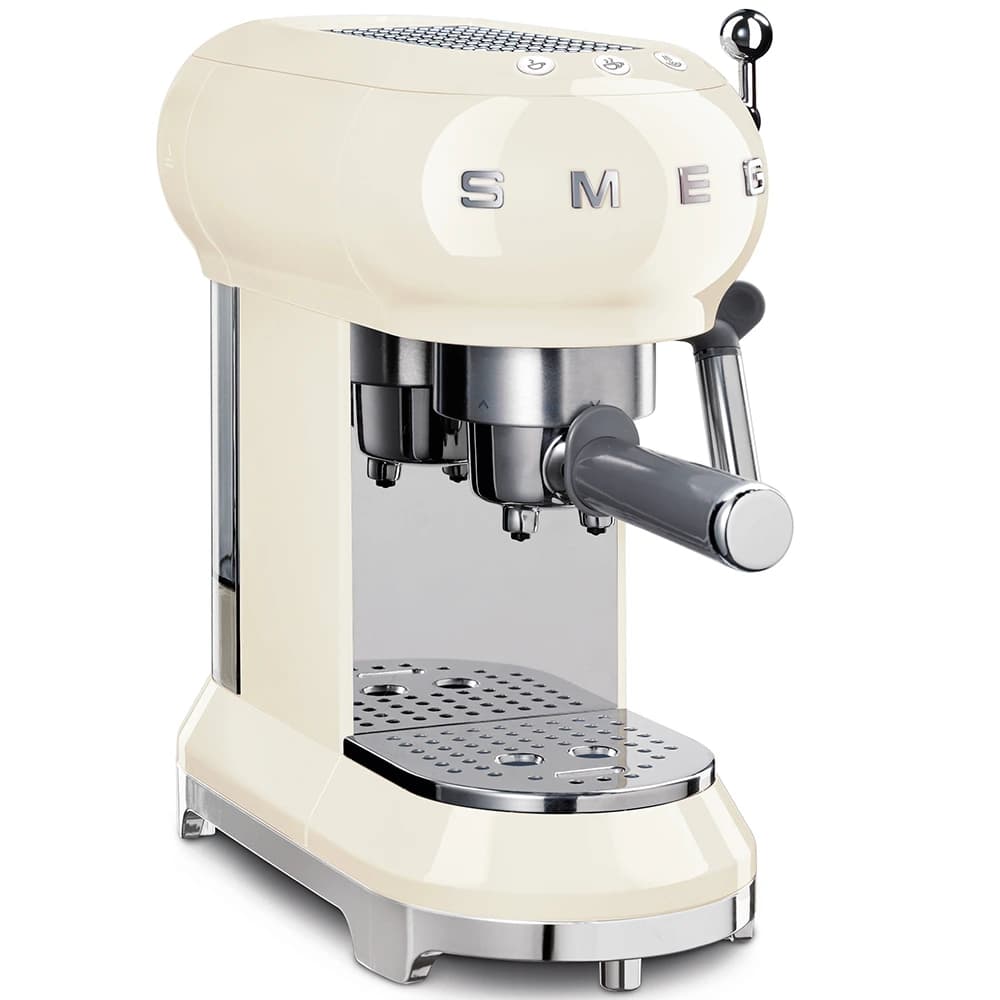
Smeg's coffee machines are easy to confuse because the styling barely changes between them. The model numbers do the work. There are three manual pump machines (ECF01, ECF02 and the ECF03 that landed in April 2026), one fully automatic bean-to-cup (BCC02), and a separate grinder (CGF03) that Smeg expects you to buy alongside any of the manual ones.
The price spread is wide. The ECF01 sits around $430 on the street, the ECF02 around $500, the ECF03 launched at $840, and the BCC02 lands near $800. That is roughly double from one end to the other for machines that share a design language and a heating system.
Smeg ECF01 and ECF02: the manual pair
These two are closer than the model numbers suggest. Both run a 15 bar pump through a Thermoblock heater, both hold 1 L in a removable tank, both take ground coffee or ESE pods, and neither has a grinder. Both use a 51 mm portafilter.
The ECF02 is the newer body: curvier, with more clearance between the group head and the drip tray, a couple of extra cup-size options, temperature settings, and a steam wand Smeg reangled to make frothing easier. None of that changes what comes out of the basket in any dramatic way. If you find the ECF01 discounted, the gap is mostly shape and convenience, and we would not pay a large premium to close it.
Our full review of the ECF01 goes into where this machine's ceiling sits. The short version: pressurised baskets and no grinder mean technique stops mattering fairly quickly, which is fine if you want a good milk drink and a machine you like looking at.
Smeg ECF03: the one that changed something
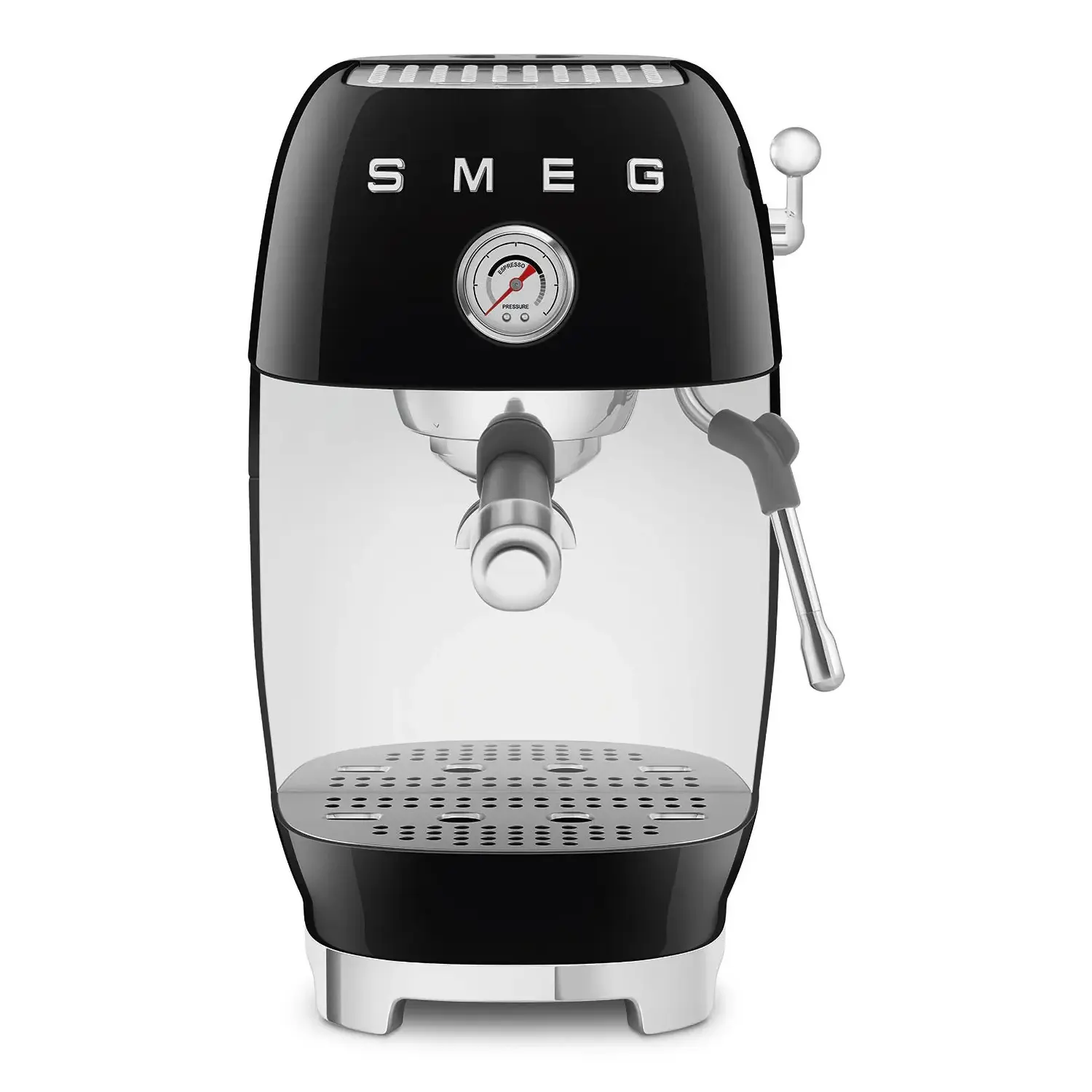
The ECF03 is the first Smeg manual machine that is not just a restyle. It moves to a 58 mm portafilter, the commercial size, which is the single most consequential spec on this page. A 58 mm basket opens the whole aftermarket: non-pressurised baskets, better tampers, distribution tools. That is the difference between a machine you operate and a machine you can actually learn on.
It also adds a pressure manometer so you can see what the pump is doing, a passive cup warmer, storage for the accessories inside the body, and a cold brew function Smeg rates at under three minutes for a single or double dose. The tank grows to 47 oz.
At $840 it costs almost twice the ECF01, and that is the honest sticking point. You are paying Breville Barista Pro money for a machine with no grinder. If the 58 mm portafilter and the cold brew are things you will genuinely use, it is defensible. If they are not, the ECF01 does the same core job for half.
Smeg BCC02: the bean-to-cup
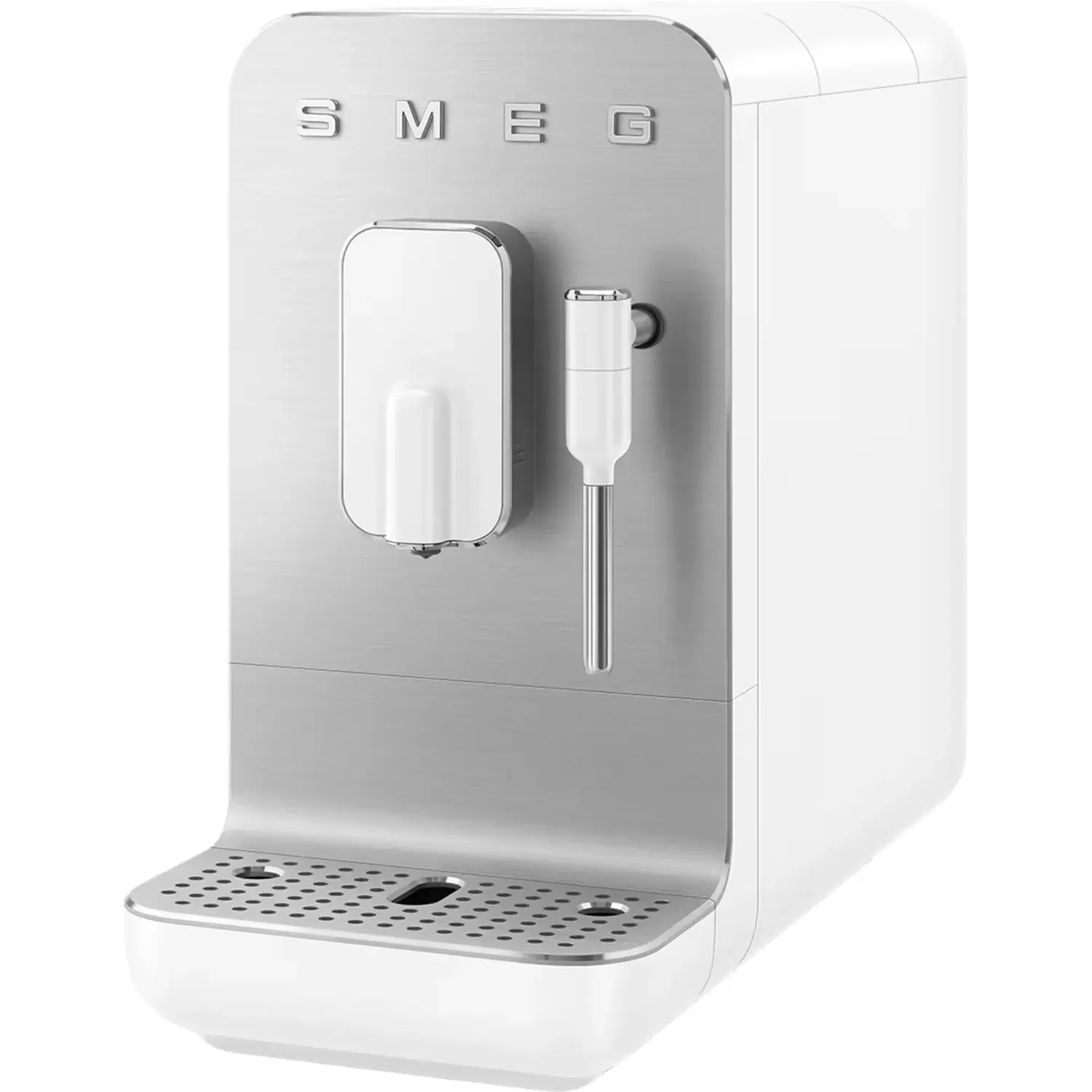
The BCC02 is a different machine wearing the same clothes. It grinds, doses and brews on its own, running 19 bar through a Thermoblock, with a 1.4 L tank and a 150 g bean hopper. Grind size is adjustable. There is a real steam wand rather than an automatic frother, so milk is still your job.
This is the one to buy if nobody in the house wants a hobby. It costs about the same as the ECF03 and removes every decision the manual machines ask you to make. It also removes the ceiling-raising you get from a 58 mm portafilter, so it will not grow with you.
The grinder, and what you are really paying for
None of the manual Smegs include a grinder. Smeg's own answer is the CGF03 at $300: stainless conical burrs, 15 settings from espresso to French press, an 8.8 oz hopper, and an antistatic system. It is a competent grinder at a price that reflects the styling, much like the machines.
Worth saying plainly: a Baratza Encore costs less and grinds better, and it will not match your kitchen. That trade runs through this entire range. You are buying a coherent look, and the internals are mid-market for the money. We think that is a legitimate thing to spend on, as long as you know that is what you are doing.
If the cup is what matters most, the sharper buy at every one of these price points is a Breville or a Gaggia plus a decent grinder. If the counter matters as much as the cup, start with the ECF01 if you can find it discounted, or the ECF03 if you want room to improve.