Philips sells three different machines and the name hides it
Philips sells three different kinds of machine under one name, so the answer depends on which kind you want. The Baristina is the small-kitchen pick and the Baristina Latte is the same machine with a milk wand. The Barista Brew is the only Philips with a 58 mm portafilter and a grinder you can adjust, so it is the one for learning espresso properly. The 3300 LatteGo is the hands-off bean-to-cup to buy.
Search for a Philips espresso machine and you will get results that look like variations on one product. They are not. Philips currently sells three architectures in the US, and they have almost nothing in common beyond the badge on the front.
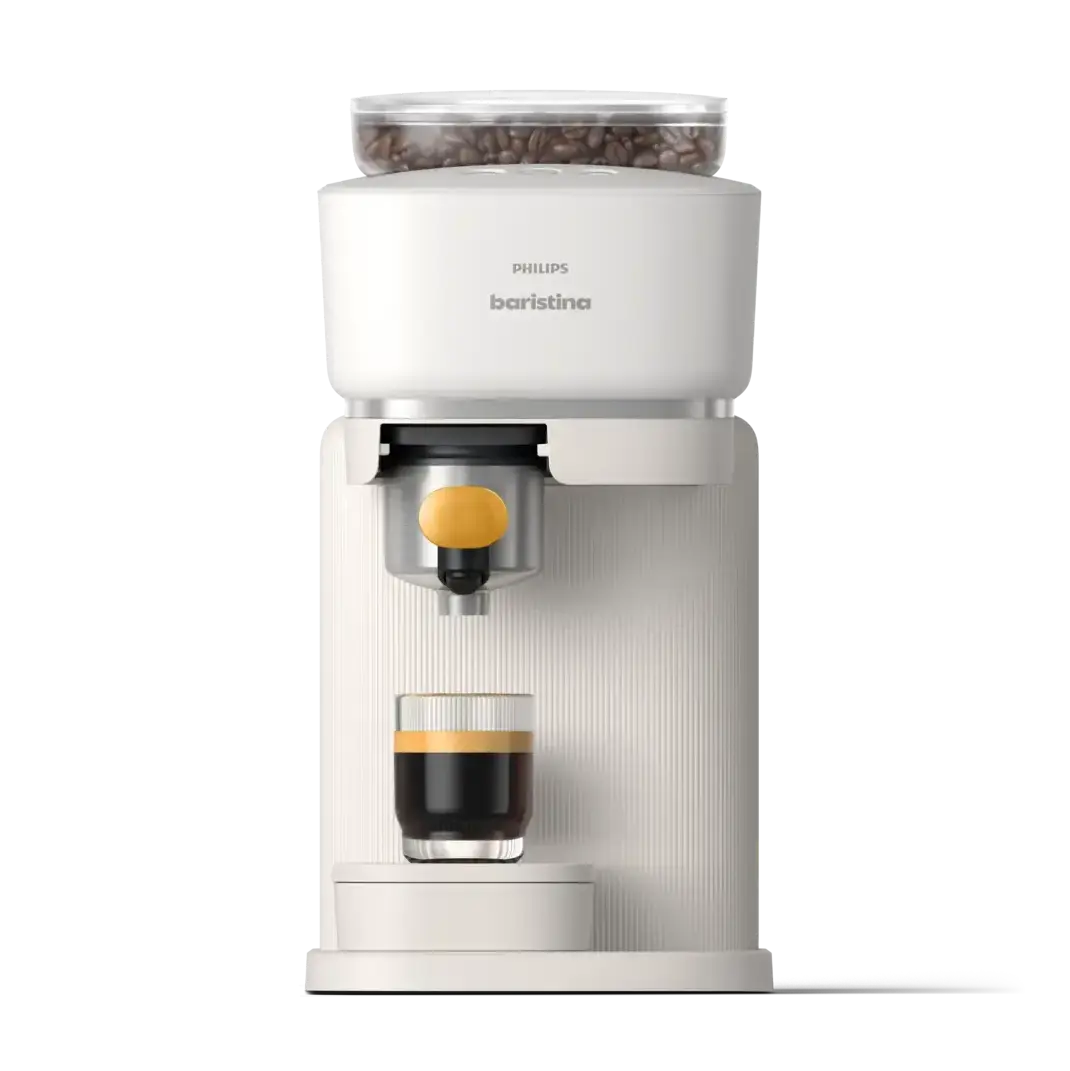
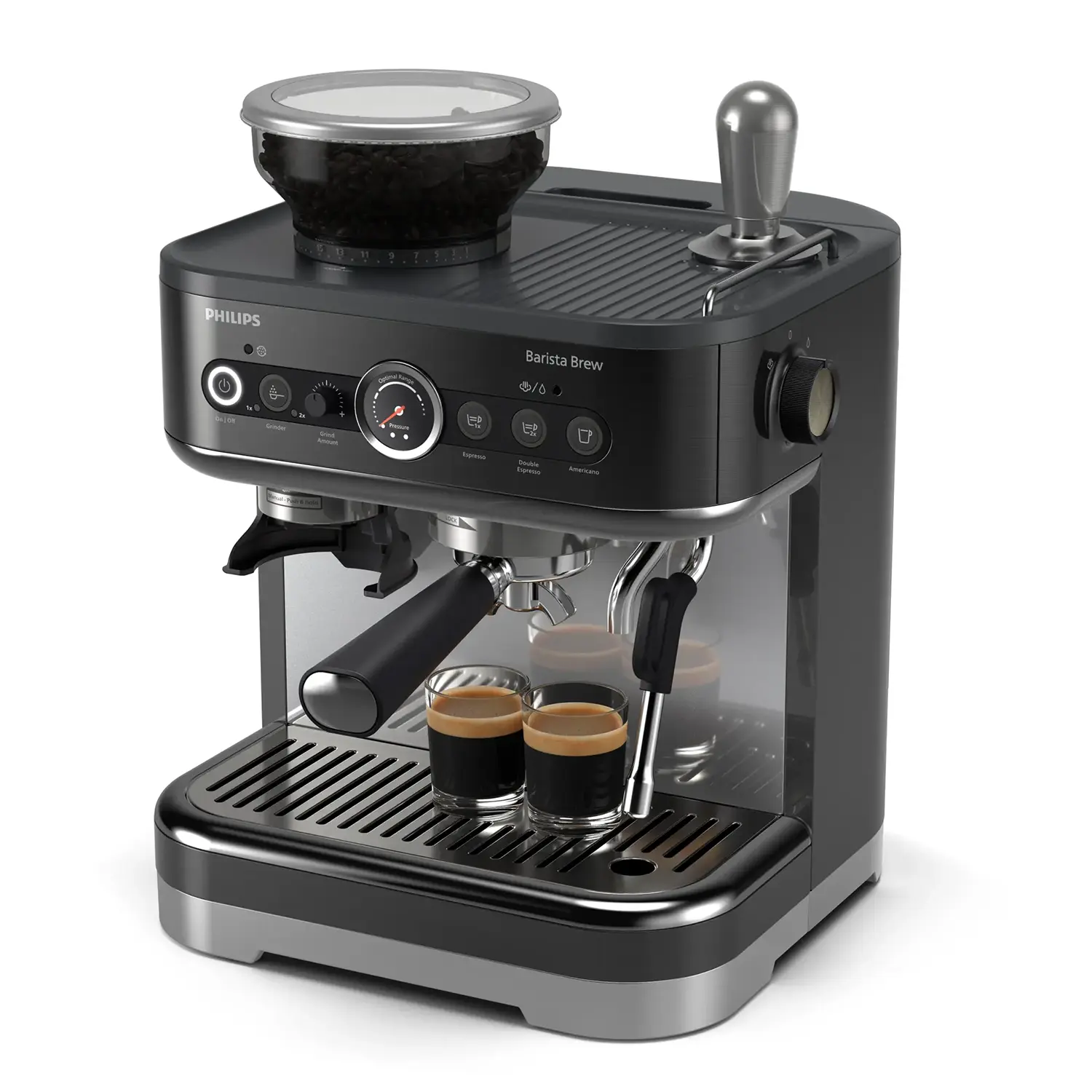
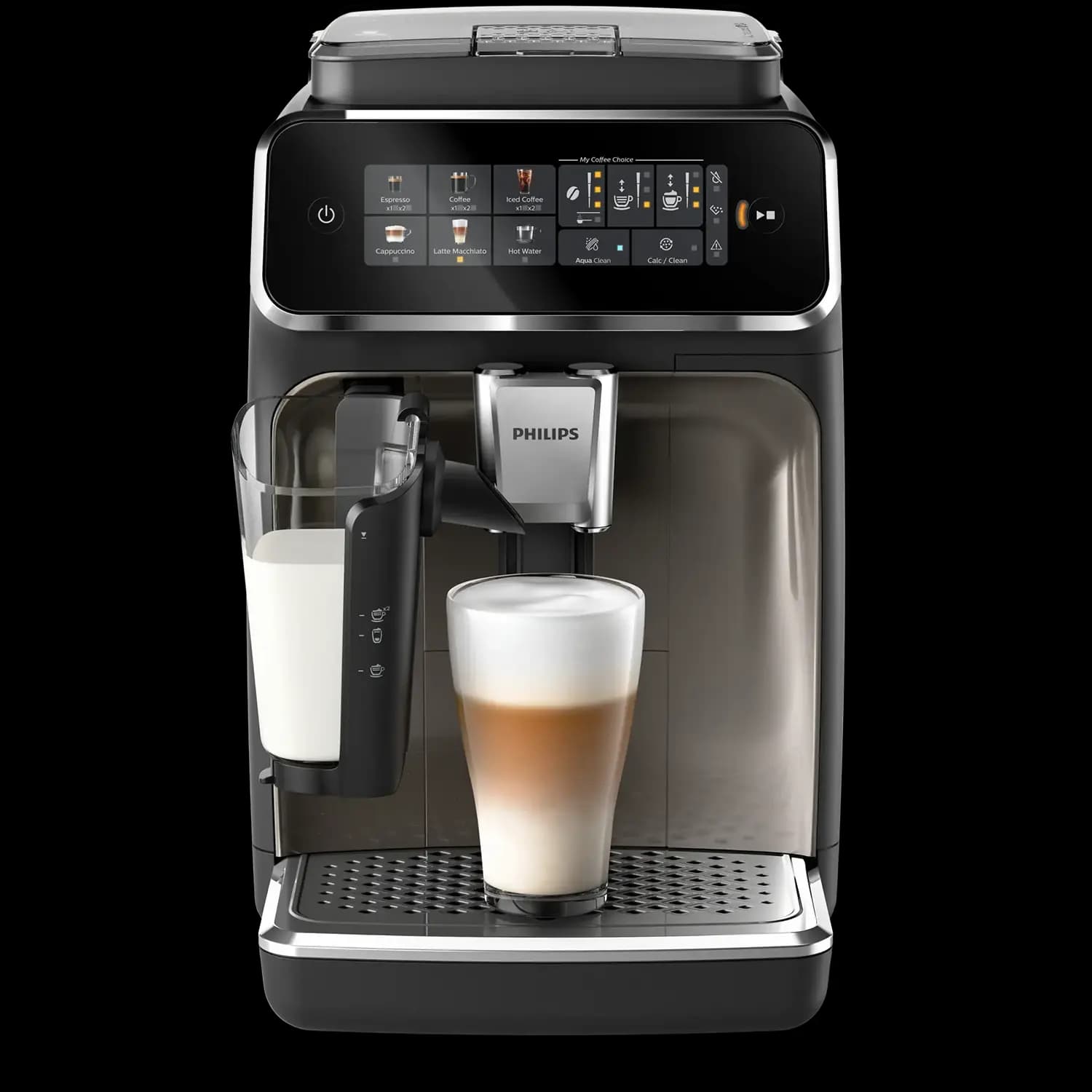
The Baristina is a portafilter machine. It grinds and tamps automatically, then you swipe the portafilter into place and it brews. The Barista Brew is a conventional semi-automatic with a 58 mm portafilter, a steam wand and a burr grinder you dial in yourself, which is the same shape of machine as a Breville Barista Express. The LatteGo range, everything with an EP model number, is bean-to-cup: beans in the top, a button on the front, no portafilter anywhere.
That matters more than any spec, because the three answer different questions. A bean-to-cup machine will never teach you to pull a shot, and a semi-automatic will never make a latte while you are getting dressed. Work out which of the three you want before you compare a single number, because the numbers only make sense inside one family.
The Baristina that costs most is the one that cannot froth milk
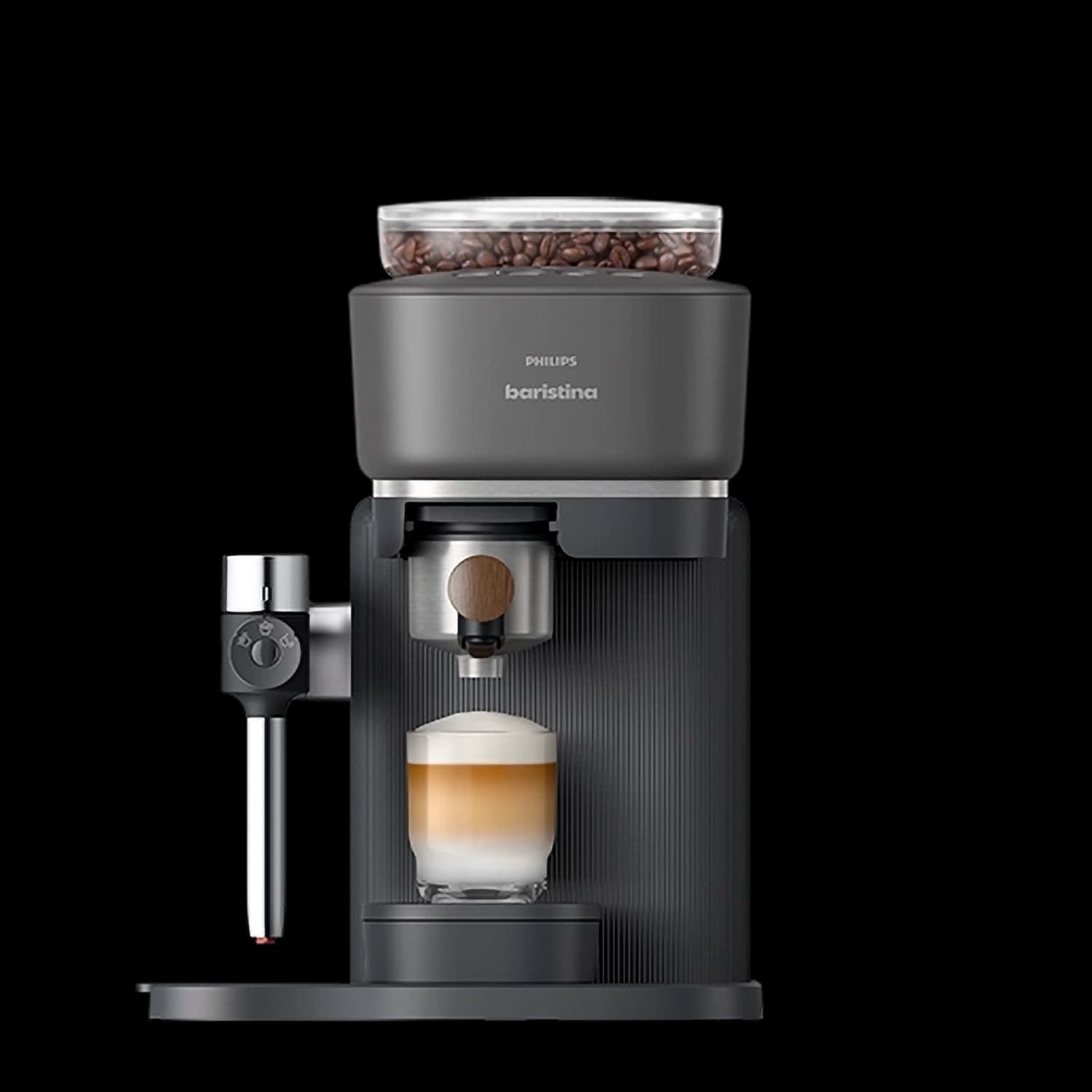
The Baristina family reads as a ladder and behaves like anything but. The plain Baristina sits at 449.99 dollars on Philips' own US store and has no milk system of any kind. The Baristina Latte is 499.99 and adds a wand built into the machine, with a knob for the froth setting and a button to run it. The Baristina Plus is 529.99, wears a stainless steel body, and has no milk system either.
So the most expensive Baristina is 30 dollars dearer than the one that makes cappuccinos, and it cannot make one. We checked what Philips says comes in the Plus box on 2026-08-17 and the answer is the machine, the portafilter and the drip tray. The extra money buys the metal shell.
If you want milk on a plain Baristina or a Plus, Philips sells a separate countertop frother for 99.99 dollars. It is a standalone jug appliance rather than a steam wand, it does hot and cold, and reviewers rate it well with plant milks. That is a perfectly good answer, but it is a second thing on the counter and it takes the real cost of a milk-capable Baristina past the Latte that already has one. Buy the Latte, or buy the plain Baristina knowing you are drinking espresso black.
One warning on price. Philips lists these at figures the market does not seem to hold. Our Philips Baristina review anchors the machine around 250 dollars because that is what it has been selling for, against a 449.99 list. We have left the price cell blank on that row rather than pick one of the two numbers and pretend it is the price.
The bean-to-cup range was renumbered and the old one is still everywhere
Here is the trap for anyone shopping the LatteGo machines. The models most written about, and the ones that dominate Amazon results, are the 1200, 2200, 3200, 4300 and 5400. Philips' own US store no longer sells most of them. What it sells today is the 2300, the 3300, the 5500 and the Café Aromis 8000.
The two generations are close enough that the older machines are still good buys, and the discounts are real. On 2026-08-17 Philips was clearing the 1200 Series at 200 dollars against a 499 list, and the 2200 at 199.99 against 629.99. That is a genuinely cheap way into a bean-to-cup machine with a ceramic grinder, and we would take it over a new 2300 at 699.99 for most households.
What you give up is the newer machines' iced-coffee settings, the larger drink menus and, on the 5500, a colour screen with five saved profiles. What you keep is the part that actually makes the coffee. Just go in knowing the 3200 you found for 499 dollars is last generation rather than a bargain on the current one, and check the warranty terms on a clearance unit before you buy.
The Café Aromis 8000 at 1,999.99 dollars is the outlier. It adds LatteGo Pro, cold brew extraction and more than fifty recipes, and at that money the comparison stops being with other Philips machines. A De'Longhi Magnifica makes a competent one-touch cappuccino for a fraction of it.
What we would actually buy
Under 500 dollars the Baristina is the interesting machine, and the Latte is the version to get unless you genuinely never drink milk. Nothing else Philips makes fits a small counter, and nothing else in this price band grinds fresh beans into a portafilter without asking you to learn anything.
Around 700 dollars the choice is the sharpest one on this page, because the Barista Brew and the 2300 LatteGo cost the same and could not be more different. The Barista Brew hands you a 58 mm portafilter and expects you to learn. The 2300 hands you a button. Neither is better, but buying the wrong one is the most expensive mistake available in the Philips range, so be honest with yourself about which kind of person you are on a weekday morning.
Above that, the LatteGo ladder does what it says. The 3300 is the sensible stopping point, the 5500 adds a screen and presets, and the 8000 adds cold brew for a price that puts it in a different conversation entirely. If you are spending past 1,300 dollars, look outside Philips before you commit.