The thing nobody mentions about KitchenAid espresso machines
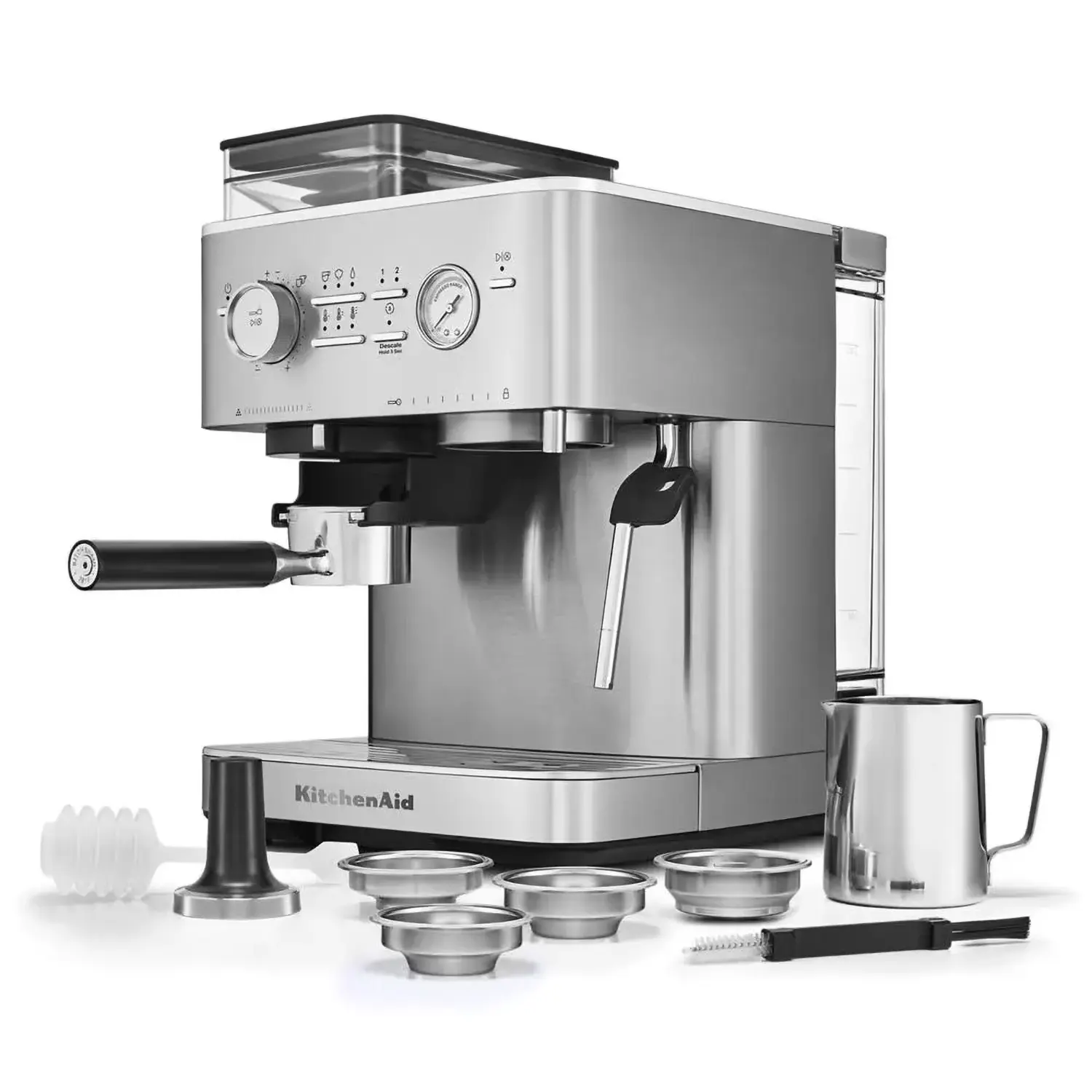
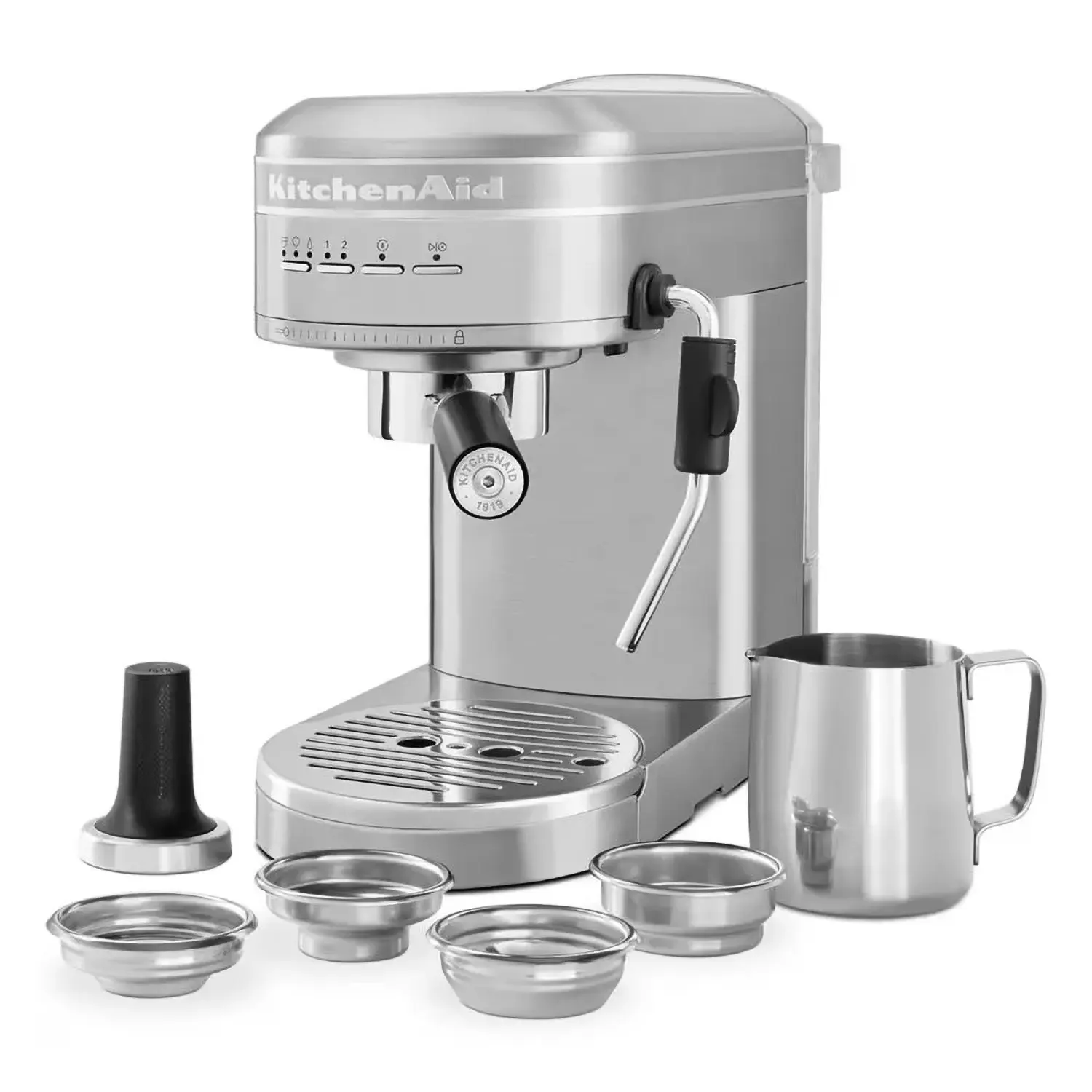
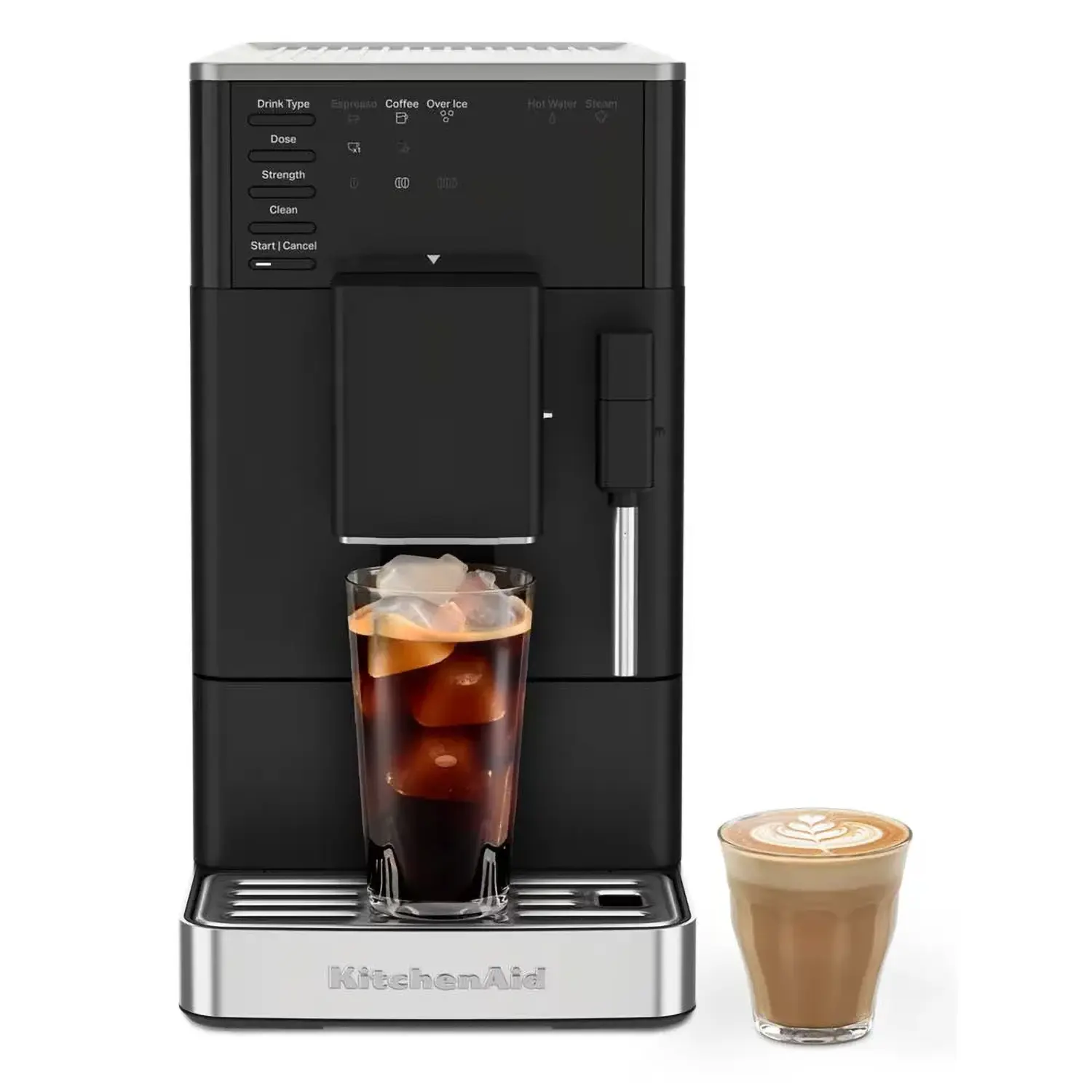
The Semi-Automatic Espresso Machine with Burr Grinder is the pick for most people: a 58 mm portafilter, non-pressurised baskets in the box and a burr grinder built in. The Metal Semi-Automatic is the value pick as the cheapest 58 mm machine we cover; add a Baratza Encore and it beats KitchenAid's own automatics. The KF2 is the iced-coffee machine and the KF3 the hands-off one.
KitchenAid is a design brand, and most coverage of these machines is about which colour matches your stand mixer. So here is the specification that actually matters, buried on KitchenAid's own product pages: both of its semi-automatic machines use a 58 mm portafilter.
Fifty-eight millimetres is the commercial standard. It is what the aftermarket is built around, and it is normally what you move up to rather than what you start on. To put KitchenAid's $249.99 machine in context against the rest of our catalogue: the cheapest 58 mm Breville is the Dual Boiler at $1,599.95, every manual De'Longhi is capped at 51 mm including the $1,299.95 La Specialista Maestro, and the Gaggia Classic Pro, the machine enthusiasts have recommended as the budget 58 mm answer for twenty years, is around $450.
Better still, both KitchenAid semi-autos ship with two single wall baskets alongside the two double wall ones. Double wall baskets are pressurised: they force crema through a small hole regardless of how badly you ground the coffee, which is forgiving and also a ceiling. Single wall baskets are the real thing. Most machines at this price give you only the pressurised kind and quietly hope you never find out.
We are not going to pretend this makes a $249.99 KitchenAid a Rancilio. It is a single thermocoil, the pump is a 15 bar vibratory unit, and KitchenAid has nothing like the parts and repair ecosystem that keeps Gaggias and Silvias running for fifteen years. What it means is narrower and still worth knowing: the format is not the thing holding you back, so a grinder and some practice will take you further on this than on most machines near the price.
A higher KF number is not a better machine
The fully automatic range is where KitchenAid's naming actively misleads. There are six machines: KF2, KF3, KF4, KF6, KF7 and KF8. The intuitive reading is that they climb. They do not.
KF6, KF7 and KF8 are the older, larger machines. KF2, KF3 and KF4 arrived on 4 May 2026, are around 25% smaller, and cost less. So the range is really two generations sitting side by side, and the low numbers are the new ones.
The consequence is the sort of thing you only find by reading the comparison table: the over-ice setting exists on the KF2, KF3 and KF4, and does not exist on the KF6, KF7 or KF8. If you buy the $1,999.99 KF8, the flagship of the range, you get 40-plus recipes, a 5 inch screen, a plant based milk mode and no iced coffee. The $799.99 KF2 makes it.
What the older, dearer machines do give you is size and materials: a 74 oz tank against 60 oz, a 9.5 oz hopper against 8.8 oz, seven grind settings against five, and metal-clad construction the new compacts do not have. That is a real difference if the machine runs all day in a busy house. It is not a difference most kitchens will notice.
Reading the rest of the automatic range
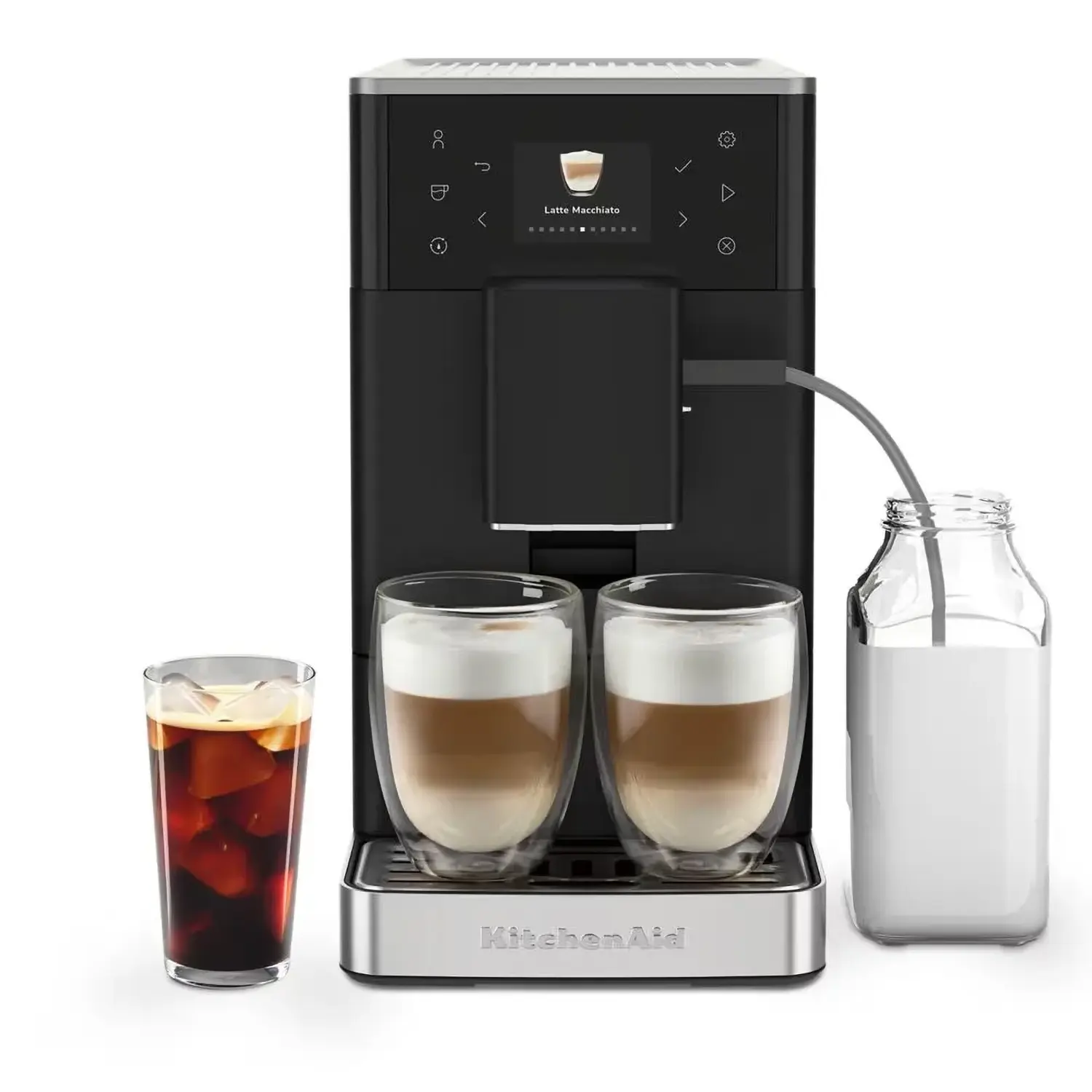
Inside the new generation, the steps are about milk. The KF2 at $799.99 has a Panarello auto steam wand and six presets. The KF3 at $999.99 swaps that for the AutoMilk system and more than fifteen presets. The KF4 at $1,299.99 adds a dedicated milk container and more than twenty. All three brew iced, all three are Quiet Mark certified for the grinder noise, and all three carry a 2 year warranty with an optional 5 year burr grinder cover if you register.
The KF2 is the interesting one, and not because it is cheapest. It is the only machine in the new generation with a steam wand rather than an automatic milk system, which means it is the only one where you decide how the milk turns out. If you have any interest in making a flat white properly, that is an argument for spending less rather than more.
In the older generation, the KF6 at $1,049.99 has 15 recipes, a removable bean hopper you can twist off to change roast, and an auto purge that clears the grinder between batches. The KF7 at $1,699.99 adds a touchscreen, dual drink delivery and 20-plus recipes. The KF8 at $1,999.99 goes to 40-plus recipes, a 5 inch screen and a plant based mode that adjusts for oat and almond.
Prices here are KitchenAid's own US list figures as of 27 July 2026 and this range discounts hard. On the day we checked, the KF2 was listed at $599.99 against a $799.99 list, and the KF7 at $1,449.99 against $1,699.99. Never pay list for one of these without checking first.
So which half of the range should you buy
This is an unusual brand guide in that our answer is to buy the cheap end, and we want to be clear that this is not a snobbery point about automatics. It follows from what each half of the range is actually good at.
The semi-automatics are genuinely underpriced for what they are, because the 58 mm group and the single wall baskets give you a real ceiling and almost nothing else at $249.99 to $499.99 does. The automatics are competent and well made, and they compete in the hardest, most crowded part of the market, against De'Longhi's Magnifica line and Ninja's AutoBarista, both of which we cover and both of which have been at this longer.
If you want a machine that does the work, the honest cross-shop above $800 is not within KitchenAid at all. If you want the KitchenAid because it matches your kitchen, that is a completely legitimate reason to buy an appliance and we are not going to talk you out of it. Just buy the KF2 or KF3 rather than the KF7, because the extra money buys size and a screen rather than better coffee.
And if you want to learn: the KES6503 with a Baratza Encore ESP comes to roughly $550 together, gives you a 58 mm group and non-pressurised baskets, and leaves you with a grinder you keep when the machine goes. That is the best thing in this range by a distance, and it is the thing KitchenAid advertises least.